
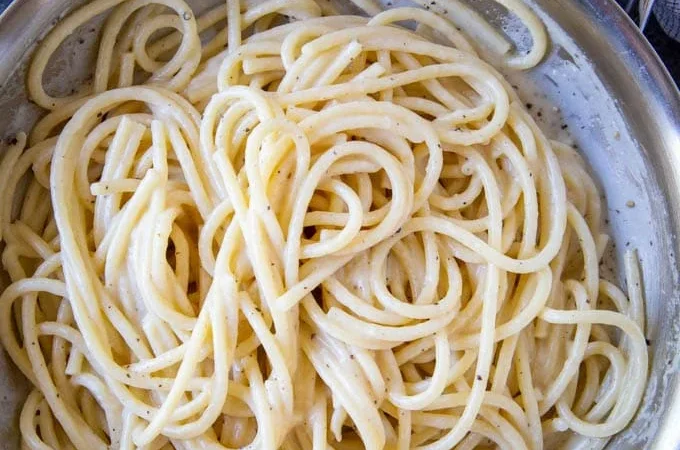
There is something about a dish that sounds fancy but takes almost no effort to make. Cacio e Pepe is exactly that kind of recipe — Roman, elegant, and built on only four ingredients.
I made this last week when I needed dinner on the table fast, and it came together in about 20 minutes from start to finish. Sam looked at his bowl, then at me, like he had just witnessed a small miracle. “There’s no cream in this,” he said. There really isn’t.
What is Cacio e Pepe?
Cacio means cheese in Italian — pronounced CAH-chee-oh — and e Pepe means and pepper. The original Roman version uses just three ingredients: pasta, cheese, and freshly cracked black pepper.
The magic comes from the technique. You reserve some of that starchy pasta cooking water and stir it into the pan with hot noodles and pepper before adding in the cheese. The Pecorino melts into a velvety sauce without any cream or butter needed — though I do add a little butter to mine, which I’ll get to.
How to Make It
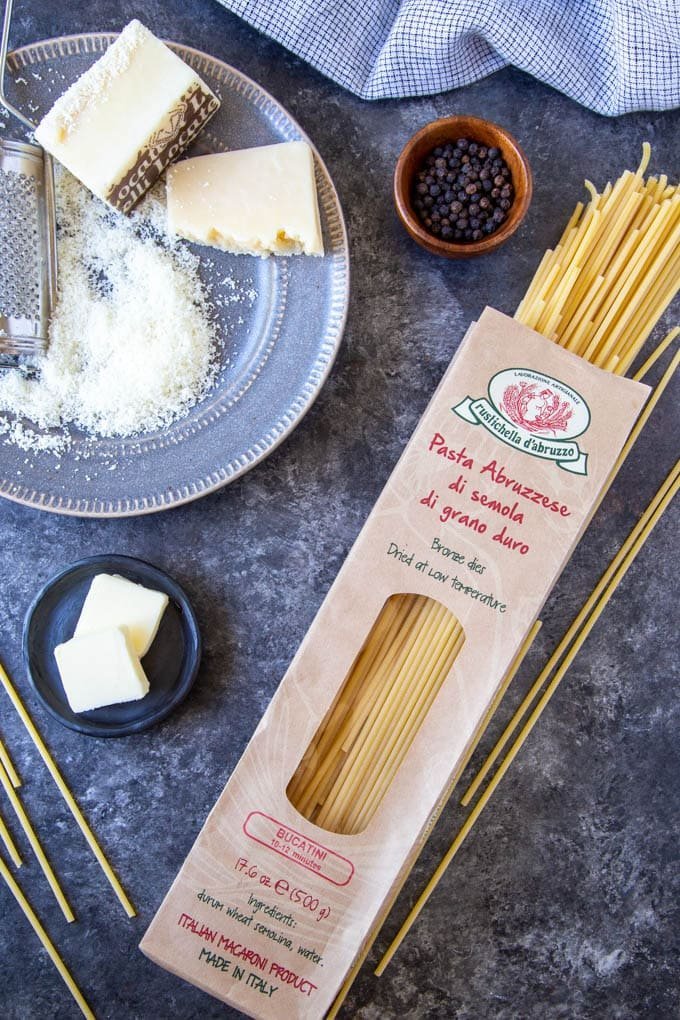
This recipe comes together quickly, so having everything measured and ready before you start is key. Here’s the sequence that works:
- Prep first. Grate the cheese. Crack the pepper — a grinder or mortar and pestle work best. Measure out the butter if using.
- Cook the pasta. Bring 2 quarts of salted water to a boil in a large pot and cook bucatini until al dente per package directions.
- Start the “sauce” while the pasta cooks. Melt butter with cracked pepper in a large saucepan over low heat. Remove from heat and set aside. (Skip this step if making it without butter — just add the pepper to the pan.)
- About 3 minutes before the pasta is done, ladle roughly 1/2 cup of pasta water into the saucepan with butter and pepper. Return to low heat.
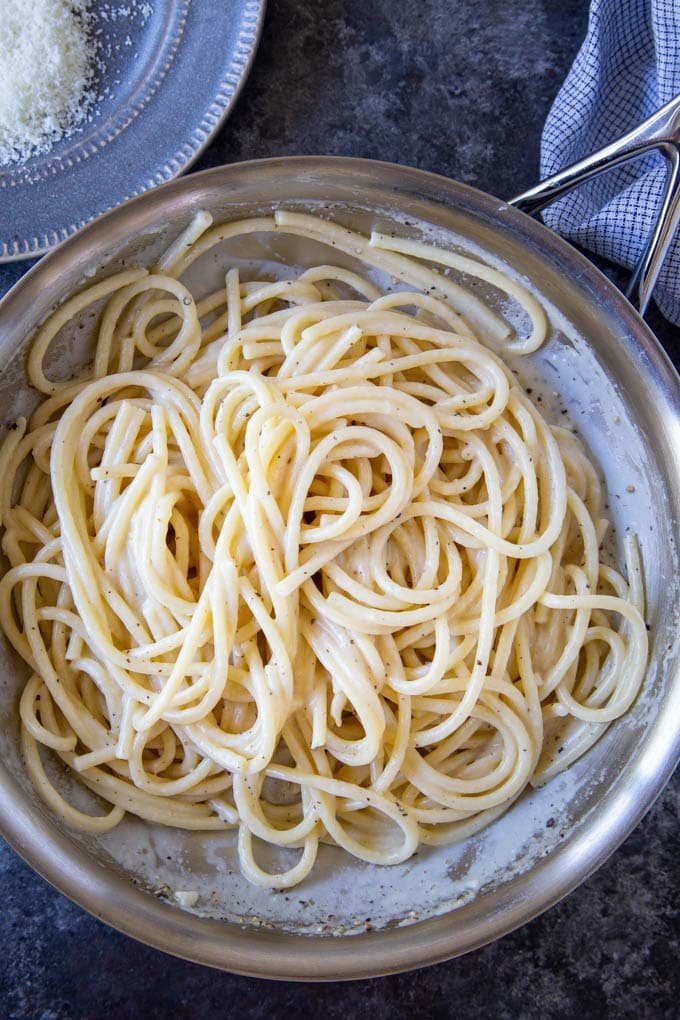
- When there’s about 1 minute left on the pasta, reserve another 1/2 to 1 cup of pasta water, then drain the noodles. Add them to the pan with the warm butter-pepper mixture and previously added pasta water. Stir continuously until most of the water has evaporated — this is where your pasta finishes cooking.
- Add the cheese off the heat. Remove the pan from the burner, add all the grated cheese, and stir constantly for 1-2 minutes until fully incorporated. If the sauce feels thick or clumpy, spoon in some reserved pasta water to loosen it. It should be creamy but not watery.
- Serve immediately, with extra cheese and pepper on top if you like.
The Cheese Is the Star
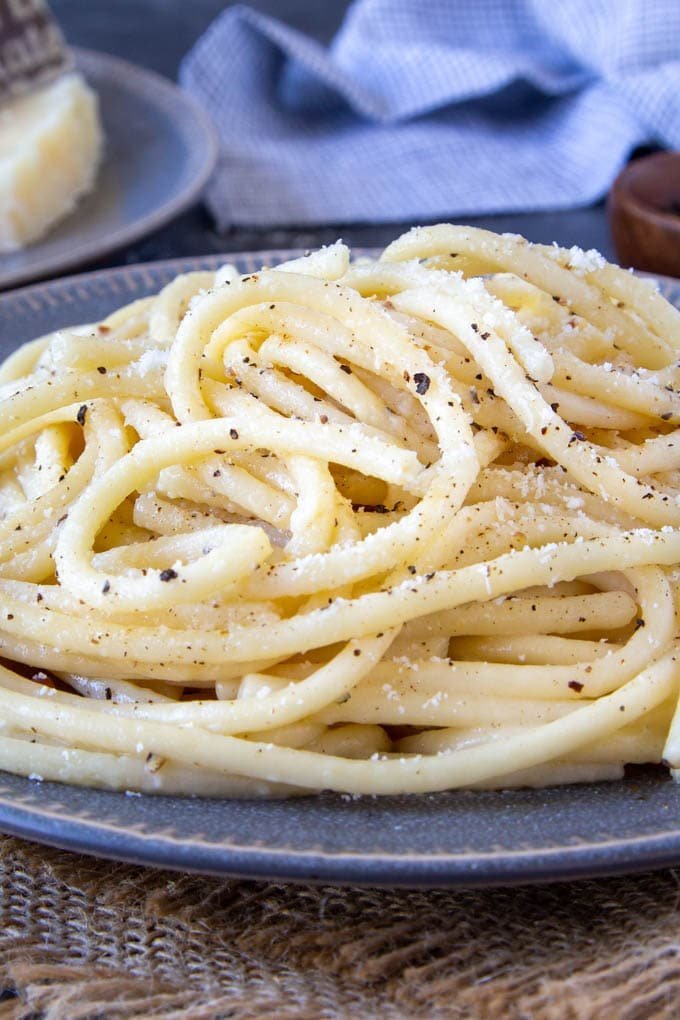
Classic cacio e pepe calls for Pecorino Romano — a hard Italian cheese made from sheep’s milk. The word pecora means ewe in Italian, which is how you remember it. It has a sharp, tangy flavor that stands up to the black pepper beautifully.
If you can’t find Pecorino or prefer something milder, Parmesan works as a substitute. It’s made from cow’s milk and has a nuttier, gentler taste. Either way, grate it finely yourself rather than using pre-grated — freshly grated cheese melts far more smoothly into that silky sauce.
What About the Noodles?
The traditional Roman pasta for cacio e pepe is Tonnarelli — thick, square spaghetti made fresh. In the United States, bucatini is the closest easy-to-find option: it’s extra-thick spaghetti with a little hole running through the center, which helps catch that creamy sauce.
Can’t find bucatini? Regular spaghetti, linguine, or fettuccine all work fine.
To Butter or Not to Butter?
The classic Roman version doesn’t include butter. I added 2 tablespoons of unsalted butter because my family leans toward butter noodles and mac and cheese — the extra richness feels like a warm hug on a cold night.
You can absolutely leave it out if you want to stay true to tradition. Both versions are delicious.
Easy Variations
This recipe is simple enough that small additions change the whole dish without complicating things:
- Add vegetables: peas, mushrooms, arugula, or spinach stir right in.
- Making it gluten-free? Swap regular pasta for your favorite GF noodles.
- Want some heat? A pinch of red pepper flakes does the trick.
- Add protein: cooked shrimp, chicken, sausage, bacon, pancetta, or salmon all work well.
- Finish with a flourish: a dollop of ricotta, a squeeze of lemon juice, or a splash of truffle oil on top.
The Tuesday Test
This one passed easily. Four ingredients. About 20 minutes total — 5 minutes prep and 15 minutes cook time. The only real trick is paying attention to the pasta water timing, but once you do it twice, your hands remember.
Ingredients (serves 4)
- 8 oz dried bucatini pasta (or spaghetti)
- 1 teaspoon coarsely ground black pepper
- 2 Tbsp unsalted butter (optional)
- 3/4 cup finely grated Pecorino Romano cheese, about 2 oz (Parmesan works too)
- 1 cup pasta water, divided and reserved while cooking
Nutrition per serving
Calories: 307 kcal | Carbohydrates: 42.8g | Protein: 11.1g | Fat: 11.3g (Saturated: 6.6g) | Cholesterol: 28mg | Sodium: 176mg | Potassium: 8.5mg | Fiber: 2.1g | Sugar: 1g
A Note from Nora
The first time I made cacio e pepe, the cheese clumped into little white islands and I panicked, thinking I’d ruined dinner. Then I remembered to add pasta water — just a few spoonfuls at a time — and stirred. Within seconds it turned silky. That’s the beauty of this dish: even your mistakes are easy to fix.
Maybe that is the real gift of simple recipes like this one: they do not demand perfection from you, only attention. And on busy nights, that feels more than enough.


Leave a Reply