
I used to think I knew what made certain fried dishes special.
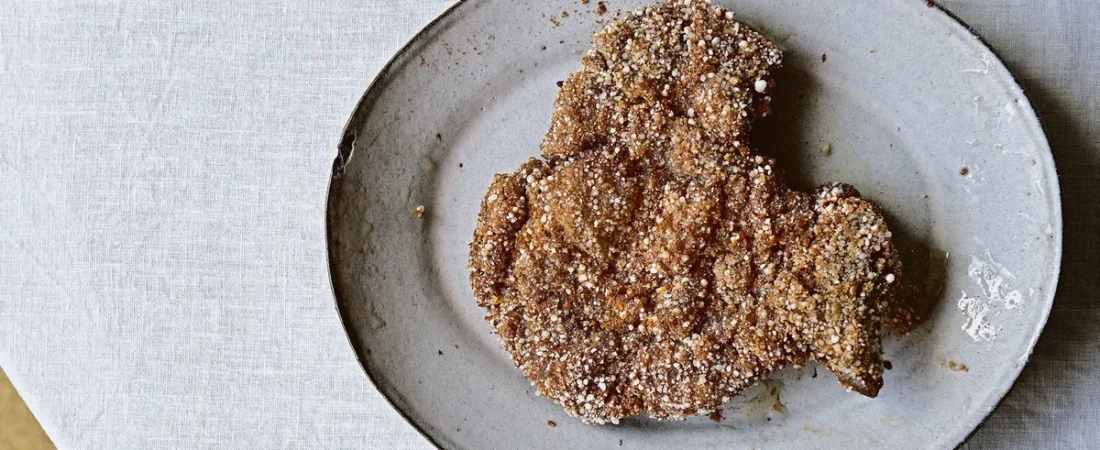
Not just crispy-on-the-outside special, but that particular kind of crunch where the crust looks almost glittery — those pale, uneven speckles that crackle a little louder than the rest. If you have ever had Taiwanese-style fried chicken poppers or pork chops, you know exactly what I mean.
For years I chased that texture without really knowing why mine never quite matched. Then one evening, staring at a bag of sago pearls in my pantry, something clicked.
The secret ingredient (and the hack)
Taiwanese fried food gets its signature crust from sweet potato starch — a grainy starch that fries up into those unmistakable pale granules. The problem? Sweet potato starch is nearly impossible to find outside of specialty Taiwanese stores. Most recipes, including ones I’ve written myself over the years, substitute tapioca starch or cornstarch instead. They work fine, but they lack those speckles entirely.
So here’s what changed everything: sago pearls are made from tapioca starch, and if you pulse them in a spice grinder for 8 to 10 times, they break down into something that looks almost identical to sweet potato starch. The same granules. The same crunch. And I can find sago pearls at my local Asian grocery without any trouble.
You’ll need a spice grinder — a food processor won’t break the pearls efficiently enough, and smashing them in a plastic bag is basically useless. These little things are tough. Pulse 8 to 10 times, then gently shake the grinder so the finer bits settle at the bottom while larger pieces rise. Check that no uncrushed pearls remain; the largest piece should be no bigger than one-third of an original pearl. If you skip this step, your crust can end up unpleasantly hard.
Once ground, store the crushed sago in a zip-lock bag until you’re ready to use it.
Cooking with crushed sago pearls
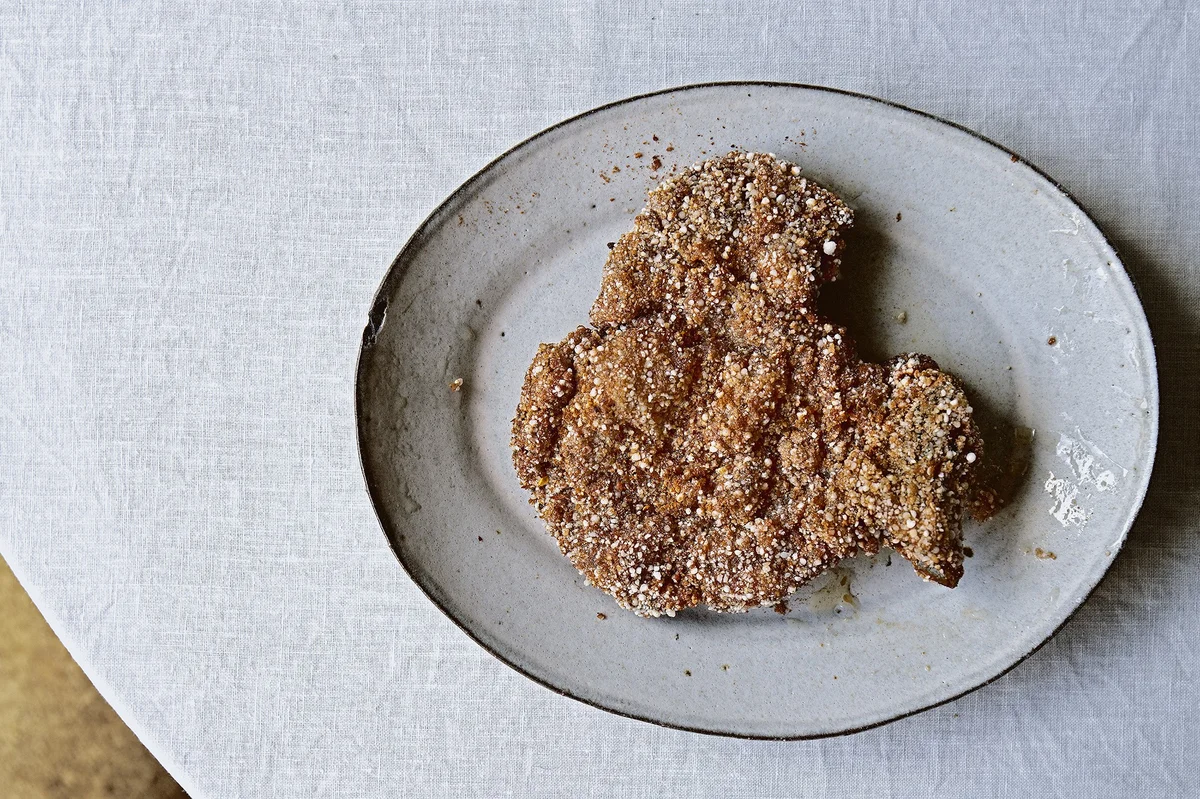
The crushed pearls work as a standalone coating or mixed partially with flour or cornmeal. I’ve used them for Taiwanese chicken popcorns, cutlets, fried calamari — anything where you want that starry, crackling crust.
Crushed sago pearl crusted pork chops
This recipe came together one weeknight when I needed something satisfying but not fussy. Four bone-in chops, a simple marinade, and the sago crust. It passed the Tuesday test easily.
Ingredients
Crushed sago pearl crust:
- 1 lb (450 g) small unflavored sago pearls
- 1 1/2 tsp garlic powder
- 1/2 tsp salt
- 1/2 tsp ground black pepper
Pork chops:
- 4 bone-in pork chops, each about 3/4 inch (2 cm) thick
- 1/4 cup soy sauce
- 1/4 cup water
- 1 crushed star anise
- 1 crushed garlic clove
- 1 tbsp rice wine
- 1 1/2 tsp granulated chicken bouillon
- 1 tsp light brown sugar
- 1/2 tsp ground black pepper
- 1/2 tsp ground Sichuan peppercorn
- 1/2 tsp salt
- 1/8 tsp curry powder
- 1/16 tsp ground cinnamon
- Ground white pepper, to dust
- Canola oil, for frying
Instructions
- Make the crushed sago pearls. Place the sago pearls in a spice grinder (in batches if necessary). Pulse 8 to 10 times, then gently shake. Check that no uncrushed pearls remain — each piece should be no larger than one-third of an original pearl. If not, pulse a few more times and check again.
- Marinate the pork chops. In a large container, mix together soy sauce, water, star anise, garlic, rice wine, chicken bouillon, light brown sugar, black pepper, Sichuan peppercorns, salt, curry powder, and ground cinnamon. Use the spiky side of a meat pounder to tenderize and slightly flatten each chop, then drench them in the marinade.
- Coat the chops. Mix the crushed sago pearls with garlic powder, salt, and black pepper. Dust each marinated pork chop lightly with white pepper, then press into the sago coating until evenly covered.
- Fry. Heat canola oil in a large skillet over medium heat. Fry the chops until golden brown and cooked through on both sides.
Serve with rice. The crust holds up beautifully even after resting.
A note from Nora
Sam came into the kitchen while these were frying and said, “Those smell like they belong somewhere I should visit.” Which is the highest compliment he gives to anything I cook. We ate them over rice on a Thursday that had no particular plans, and Biscuit sat by the counter looking deeply suspicious of crumbs falling to the floor.
Maybe that’s the thing about small kitchen discoveries — they don’t just change a dish. They turn an ordinary dinner into something that feels like a place you want to come back to.
Leave a Reply