
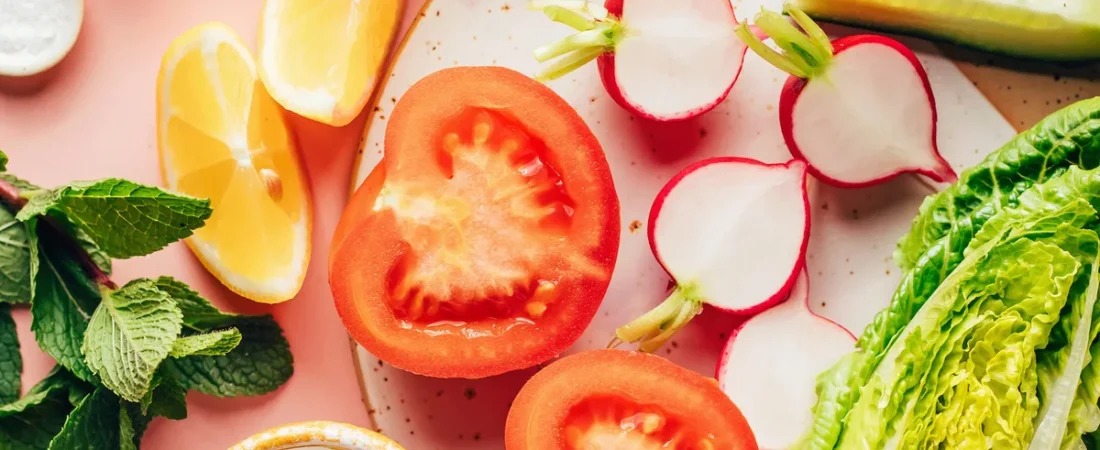
My kitchen counter gets a little sad after 6 p.m. on school nights. Homework, reheated rice, general exhaustion — you know the thing. So when a salad promised 20 minutes and one bowl, I took the bet.
I made it twice last month before writing this down. The first round used a soup-y grocery store cucumber and I hated it. The fix was a Persian cucumber, better salt balance, and store-bought pita chips instead of pretending I’d have day-old flatbread lying around. What follows is the version that stuck around: crisp, bright, and a little tart-sweet in the best way.
Why this dish
Here’s the honest math: a side dish that takes 20 minutes and one bowl means less cleanup on the nights when there’s no energy for either. Fattoush comes from the Levant — that Eastern Mediterranean corner of the Middle East — and the classic version is built on fresh vegetables, toasted flatbread, and sumac, that bright, lemony-spicy red spice. Pomegranate molasses is the other signature ingredient, and it’s what gives the dressing its deep, jammy tartness.
This is my easy, inspired take: the same bright flavors and crunchy textures, plus a gluten-free option if that’s on your plate too.
It works as a side alongside anything Mediterranean or Middle Eastern you’re throwing together, or toss in a can of chickpeas and it becomes a light meal on its own. Hot evenings, it’s a lot.
What you need
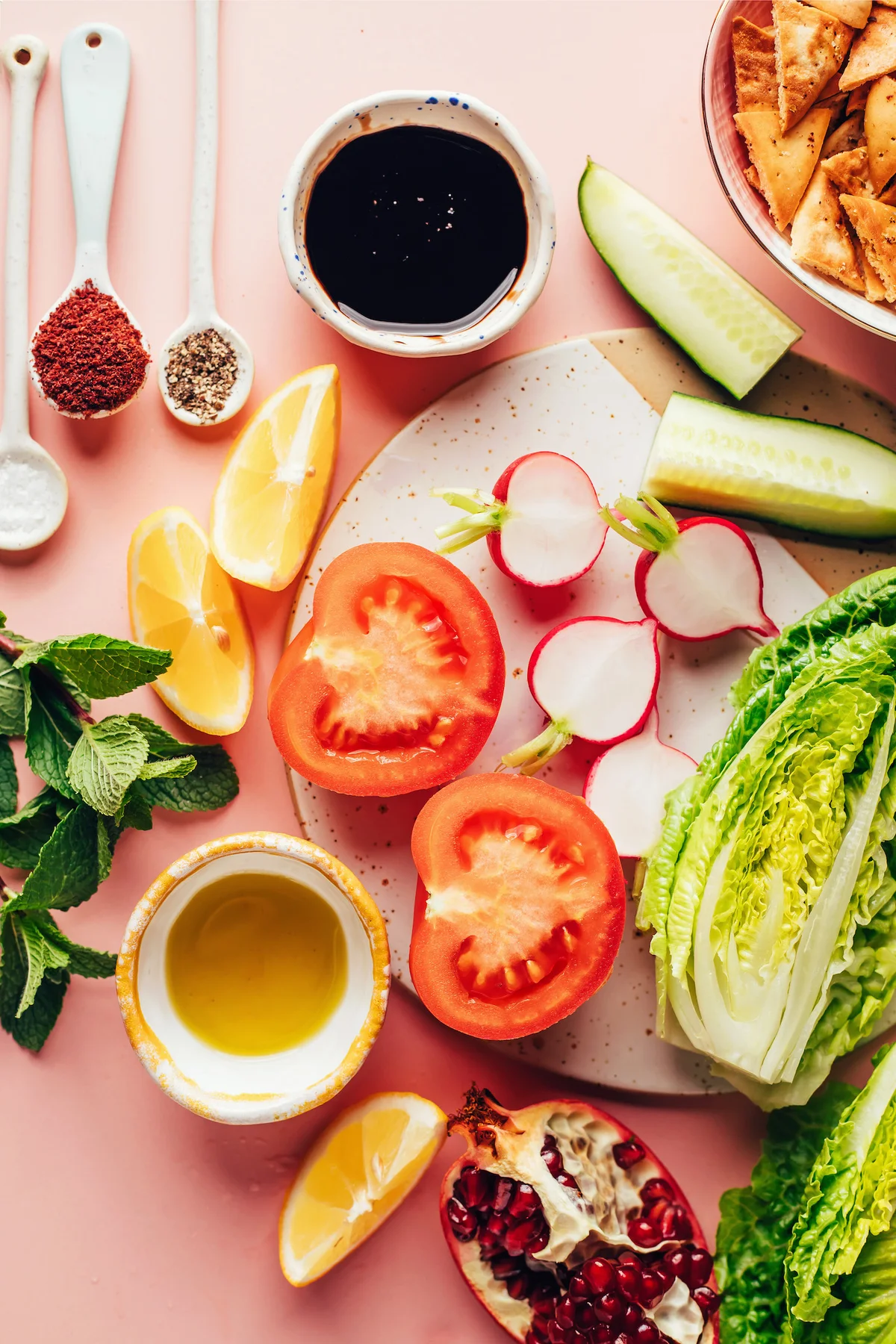
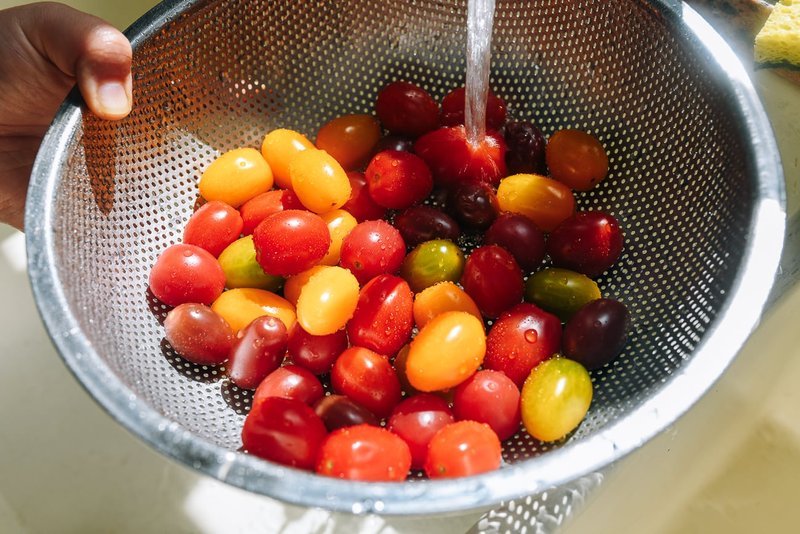
For the salad, you’re starting with romaine. I like it for the crunch and the neutral flavor — it lets the dressings lead. Then it’s fresh crunchy vegetables: cucumber, tomato, radish, whatever seasonal stuff is actually good that week. I’ve had homegrown tomatoes from a neighbor’s garden in this exact salad and it took the whole thing up a level, but honestly, the dressing is forgiving.
The dressing is the part that makes it fatouesh instead of a generic green salad: lemon juice, pomegranate molasses, sumac, salt, and pepper, tossed right in the bowl where the salad lives. No mixing bowl, no whisk, no extra dishes. Search snippet confirmed the recipe is being covered on a bunch of food copy sites right now — apparently the one-bowl-20-minute framing struck a chord. I’ll take that as validation.
Maple syrup and extra-virgin olive oil are both optional balance. I’ll be specific: if your pomegranate molasses is on the sweet side (I’ve had one over there where I skipped the syrup entirely), you may not need it. And the olive oil — use good oil, and use less than your instinct says. I once drizzled too much of a standard grocery-store oil and the whole bowl turned bitter. Not my proudest moment.
Step by step
Pita chips. Store-bought saves you the most time and this recipe is designed around that. If you have day-old pita or flatbread you’d otherwise compost, here’s the homemade route: 1 1/2 cups pita bread cut into small triangles (roughly 1/2-inch by 1/2-inch by 1-inch, separated so each chip is a single layer), 1 1/2 tablespoons olive oil, 1/4 teaspoon sea salt, and if you like, 1/2 teaspoon dried oregano and 1/2 teaspoon sumac. Preheat the oven to 350°F (180°C), line a baking sheet with parchment, toss the triangles with oil and seasonings, and bake 8–12 minutes until the edges just start to brown and crisp. Watch them after 8 — they go from crisp to toast in a hurry, and it depends a lot on how fresh and thick your pita is. Let them cool on the pan; they crisp up a lot more as they cool.
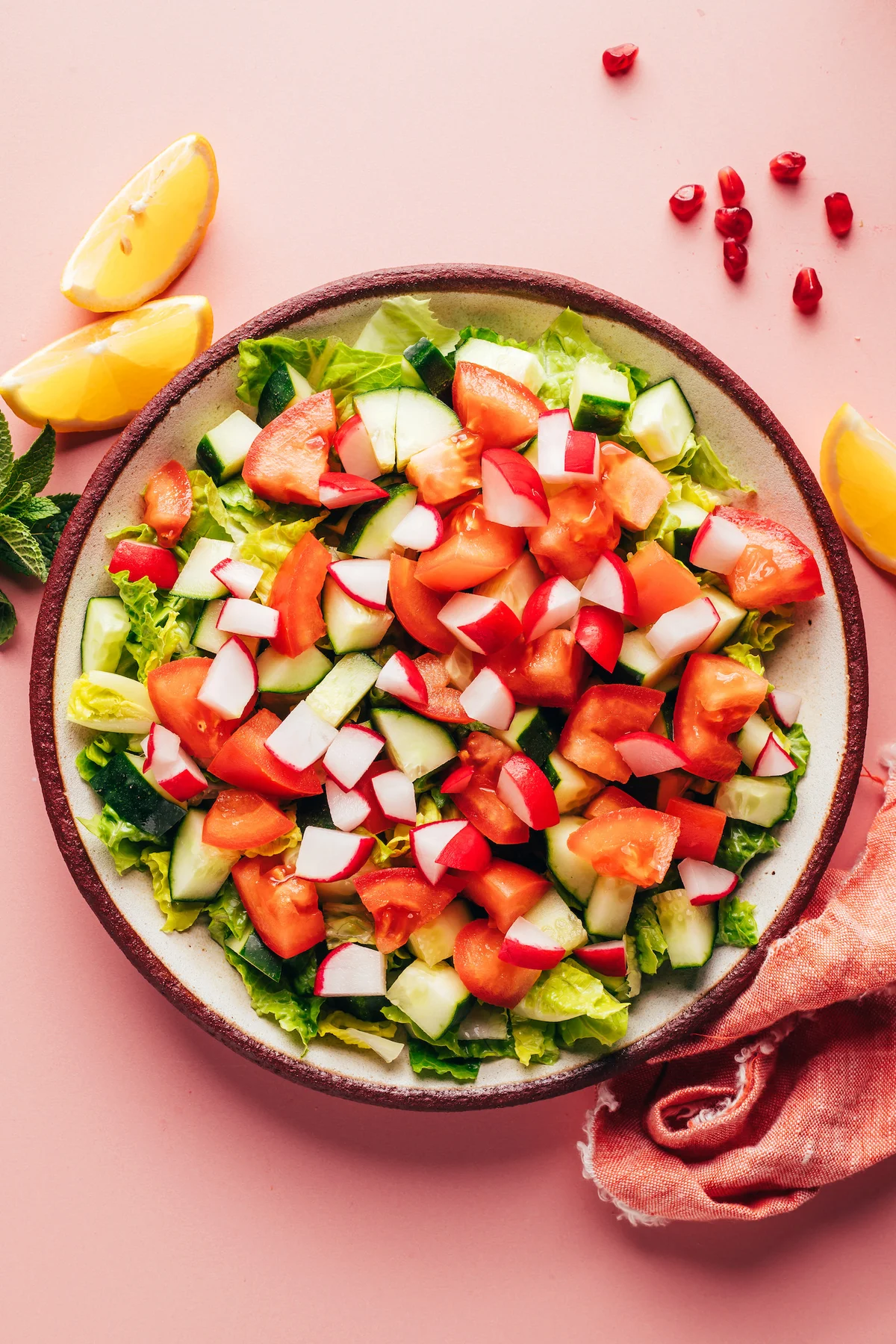
The salad. In whatever large mixing bowl or serving platter you’re feeling, add 3 cups chopped romaine (about half a head), 2 cups chopped crunchy vegetables (I’d do about 1 cup cucumber, 3/4 cup chopped tomato, 1/4 cup radish, or whatever the crisper smells like that day), 1 tablespoon lemon juice, 1 tablespoon pomegranate molasses (balsamic is your non-traditional fallback), 3/4 teaspoon ground sumac, and a good pinch of salt and pepper. Toss hard. Taste. Then adjust: more lemon for brightness, more molasses for that deep tart richness, a little maple syrup if it needs sweetness, or a light drizzle of good olive oil for richness. This is the part where you stop being a recipe-following machine and just cook.
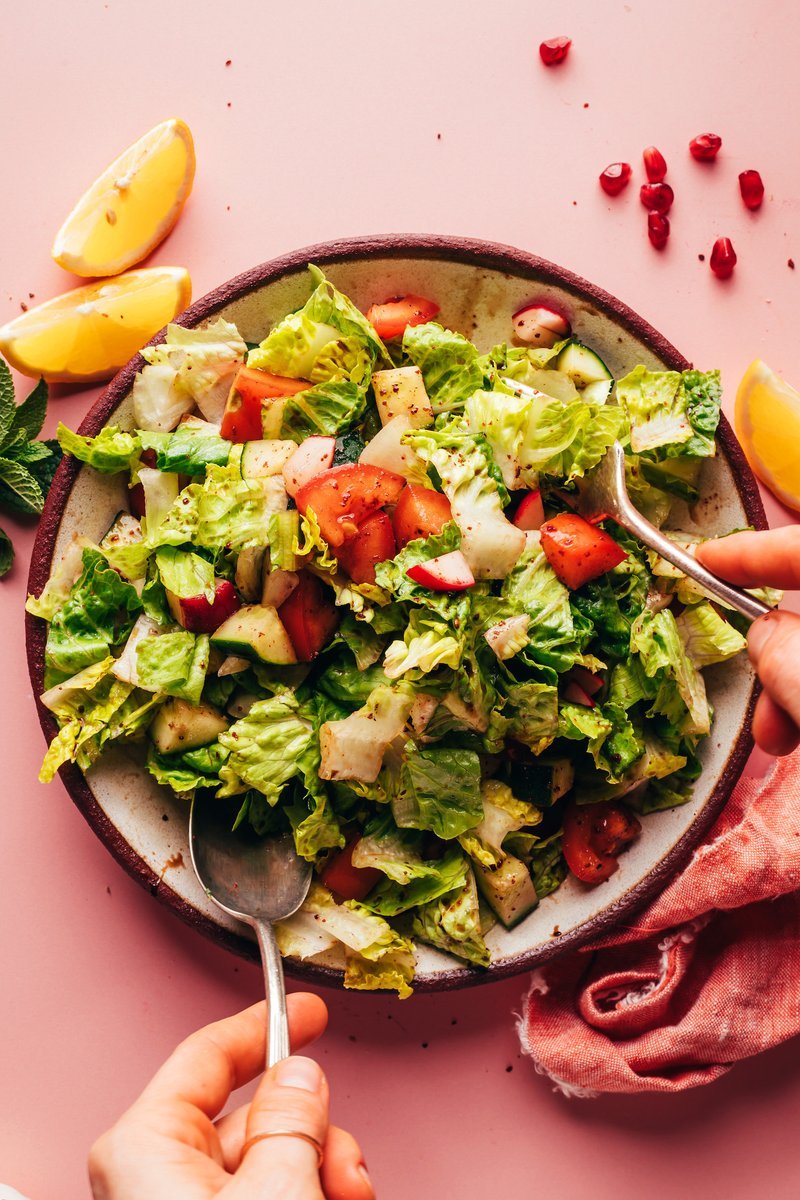
To serve. Right before it goes on the table, scatter over 1/3 cup fresh mint leaves (I like keeping them whole for the pop of green and shape), 1 1/2 cups pita chips slightly crushed, and 1/4 cup pomegranate seeds (sliced strawberries work in season if you can’t face a pomegranate — not traditional, but honest). If you’re serving it as a meal, drain and rinse a 15-ounce can of chickpeas and toss those in too.
Serve immediately. This is the one salad where the pita chips start going soft the moment they touch the dressing, and you don’t want that. It’s best fresh, and leftovers keep fine for 2–3 days if you store the dressing and the chips separately — the greens will last, the texture will not.
Swaps, honestly
Persian or Lebanese cucumbers are the ones to chase — they have the flavor you actually want here. English cucumbers are the next best, and if that’s all your store stocks, peel and seed them for better flavor and texture. The balsamic swap works in a pinch but it’s not the same thing at all, and the strawberry swap is a season-only move for the same reason.
Nutrition per serving (makes 4 side servings, or serve half for a proper entrée): 127 calories, 21.6g carbs, 2.8g protein, 4.1g fat, 138mg sodium, 4g fiber, 7.5g sugar, 14mg vitamin C. Rough estimate, calculated with a store-bought pita chip and the optional chickpeas left out. Nothing dramatic, just a light bowl.
A note from Nora
Sam ate half the bowl before I even got it to the table and then asked if I’d made a huge batch, which was the first time I’d earned a standing ovation from that man in six years. Biscuit got under the table and got into one aril, got the sour face he always gets. I made it again the next night, and again on the weekend, and I think that’s the whole point of a dish like this: it doesn’t fix anything, but on a Tuesday it makes the kitchen feel like a warm, well-lit place. If I can make it on a Tuesday, it’s a keeper.
Leave a Reply