
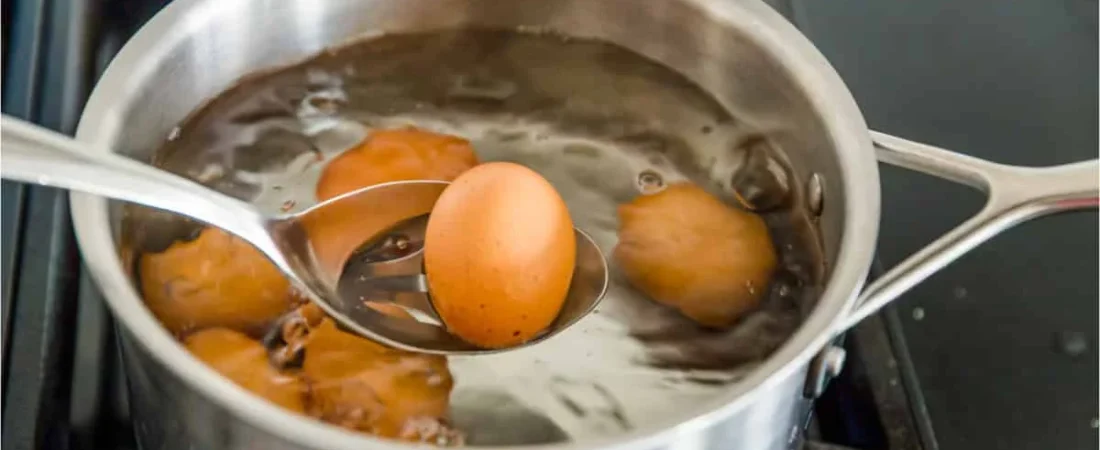
It was a Wednesday night, the woman of the house was running late, and I was standing at the stove trying to rescue a batch of hard-boiled eggs for Sam’s salad. Last time I’d boiled them, I’d walked away from the pot for too long. Out they came — rubbery, gray-ringed, the yolk with the texture of landscaping chalk. I’d been doing it wrong for years, and it rattled me how much I didn’t actually know about one of the oldest dishes in the kitchen.
So I sat down and tested this properly in my own kitchen: cold-water start versus boiling-water start, a dozen eggs, every minute of doneness from soft to fully hard. What I landed on has been my method ever since, and it makes peeling the shells genuinely easy. If I can boil a dependable egg while keeping an eye on the kids, you can too.
First, the quick answer
Lower cold large eggs gently into boiling water, and cook them uncovered:
- 6 minutes: liquid yolk, barely set whites
- 7 minutes: jammy yolk, fully set whites
- 8 minutes: medium-boiled, soft-set yolk
- 10 minutes: classic hard-boiled, still tender
- 12 minutes: firm, fully set hard-boiled
Then straight into an ice bath for 10 minutes. That’s it — the whole thing takes about 25 minutes start to finish, and the times are exact enough to plan a midnight snack around.
Which time is your time
This is where a timing chart stops being boring. The same method, different stop points, and each one has a job it’s actually good at:
- 6 minutes (runny yolk) — an egg cup and a slice of toasted bread for dipping. Under 6 minutes and the whites won’t be there for you.
- 7 minutes (jammy) — the one I reach for on ramen or grain bowls on a slow Saturday morning.
- 8 minutes (medium) — a high-protein snack between meals. The yolk has just enough body to eat with a spoon.
- 10 minutes (tender hard-boiled) — the number for egg salad. Mash it, season it, call it lunch.
- 12 minutes (firm hard-boiled) — Deviled Eggs, a sliced Cobb Salad, anything that needs the yolk to hold its shape in a slice. Go past 12 and you’ll start looking at that greenish ring around the yolk, which is just pretty once, honestly.
How I actually cook them
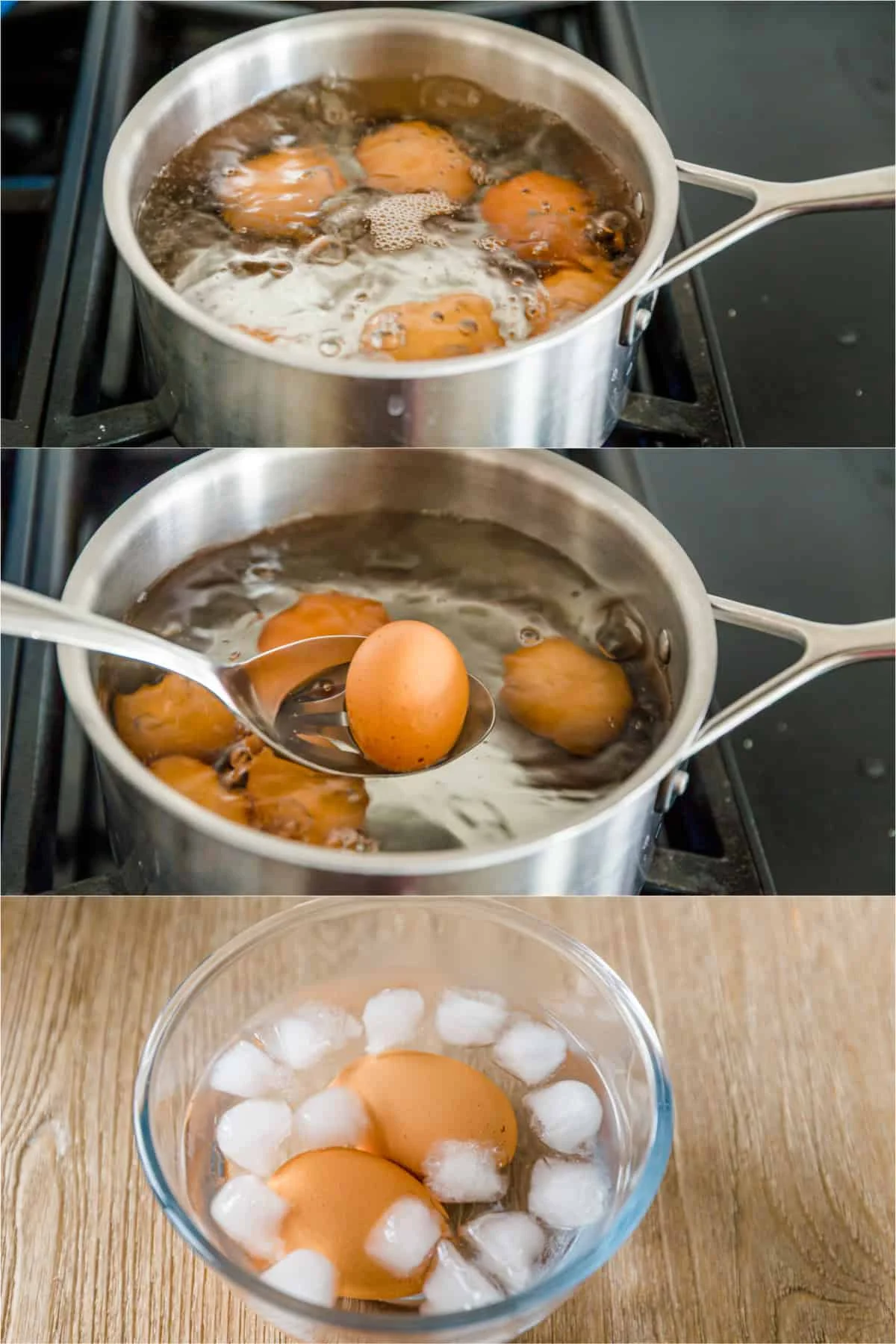
The method I landed on after testing: cold eggs straight into boiling water. Not the other way around. Here’s the whole thing.
- Boil the water. A 3-quart saucepan with 5 to 6 cups of water. Enough that the eggs sit covered by about an inch of water. High heat, lid off, until it’s a full boil.
- Lower the eggs in gently. This is the part people crack. Use a slotted spoon or a skimmer, ease them in one at a time from the fridge, and resist the urge to splash and hurry. Right after they’re in, drop the heat so the water holds a steady, gentle boil instead of a rolling one — the eggs should simmer, not bounce around and crack.
- Start the timer the second they’re in. This is the only rule I’m strict about. Cook uncovered for as long as the chart above says, no peeking, no shrinking the time because they look done. They never look done.
- Mind the ice bath while they cook. A bowl of ice water, 10 minutes of chilling is non-negotiable. Transferring them out is easier with a basket or slotted spoon.
The part everyone gets wrong: peeling
Here’s what all the testing told me about why my batches used to come out bumpy and ragged. The water temperature matters more than any kitchen trick.
- Start with boiling water, not cold. I tried the slow, cold-water start first — what most people grow up with. It gives the least consistent cook, and the shells don’t release as clean. The hot start did it better in every single batch I tested.
- The ice bath does the real work. Ten minutes of cold water stops the cooking dead and shrinks the egg just enough that the membrane releases from the shell.
- When you peel, go for the wide end. There’s an air pocket down there. Crack the shell firmly and start the peel from that end, working the shell under the membrane. Peeling under cool running water loosens it even more.
For a big batch — Deviled Eggs or a tray for a potluck — I boil several eggs at a time and peel while they’re still cold. Nobody notices the time.
What about vinegar and salt?
I still see the advice to add vinegar or salt to the water, and I’ve tried both. Salt helps if a shell cracks and the white starts weeping into the water. A little vinegar helps that same crack. But neither is what gets my shells off clean — the boiling-water start plus the ice bath do all the real work. I don’t add either to my pot anymore.
A few words on freshness
We cook with store-bought large eggs — the size the timing chart was built on. Eggs a couple of weeks from the fridge peel easier than eggs laid that morning. If you get truly fresh eggs from backyard chickens, the shells stick to the membrane in a way that’s almost a hobby, and a pressure cooker is the gentle answer for those. If you’re working outside large eggs, adjust the clock: smaller cook faster, bigger cook slower. The chart assumes large, which is what most recipes assume anyway.
Storage, the honest notes
- Refrigerate within 2 hours of cooking. Not on the counter overnight.
- Hard-boiled eggs keep up to a week in the fridge. Keep them in the shell as long as you can — the shell keeps them from drying out and from absorbing refrigerator smells.
- Soft-boiled eggs don’t keep as long. At least 2 days in an airtight container, but honestly they’re an eat-them-now dish.
What to make with them
Once the technique is on auto-pilot, eggs start showing up all over the week: as a protein snack straight from the fridge, as the base for egg salad or deviled eggs on Saturday, as the quiet upgrade to a grain bowl, as the chopped addition to a potato salad or Cobb salad. In my house, they’re the thing the kids actually finish, and a batch of 8 in a 3-quart pan is my favorite way to feed a family on a night when everything else has to be simple.
A note from Nora
The first time I nail a perfect hard-boiled egg, I opened the door to show Sam and he said something I haven’t been able to recall since. We both knew the relief: a dish you used to dread barely gets the chance to frustrate you anymore. This one passed the Tuesday test. Put the eggs in, set the phone, come back with clean hands — that’s the whole method, and the whole point, as far as I’m concerned.


Leave a Reply