
There is a moment in every Chinese takeout order when the restaurant eggplant stops making sense. Why does it hold its shape? Why is it still that deep, glossy purple after frying? I wondered about it for years, and then I made this recipe enough times that the answer finally made sense. And once you know it, this dish falls right into my weeknight rotation.
So here it is: a Cantoneese-style chicken and eggplant stir-fry that actually tastes like the restaurant version, but uses a fraction of the oil and fits inside one pan. No deep fryer required.
First, which eggplant to buy
Cantonese eggplant is the long, thin purple variety — the one with a slender neck and pointed tip. It has fewer seeds than the big round globe eggplant, thinner skin, and cooks faster because it is so much more tender. During summer, you can find it at my local Asian grocer, so fresh Cantonese is peak-season food.
If you only have Japanese eggplant (also long and thin, just darker and slightly denser), it works fine here. It just takes a little longer in the pan. Globe eggplant can be used in a pinch, but it is thicker-seeded and needs extra time, so I would only reach for it if nothing else is available.
Why this version tastes restaurant-style
The honest version: most Chinese restaurants deep-fry their eggplant. That is how it gets that extra-soft, vibrant purple texture, and why you love that carnival of twice-fried string beans (they are deep-fried, too — my mom would confirm it, she used to dry-fry them at home). Deep-frying also keeps the table service moving, so it is a speed trick as much as a flavor one.
At home, you get about one-tenth of the oil by searing the eggplant in the wok instead. It is still supremely delicious, and even if your home version does not hold that purple perfectly, the flavor carries you over in taste. I promise.
The one technique worth knowing
Velveting is a Chinese cooking technique for keeping meat moist through the high heat of the wok. For this recipe, it means coating the chicken with a little water, cornstarch, oil, and oyster sauce. When you add it to the hot pan, the cornstarch-coated chicken seals and steams gently inside itself, so it comes out tender and moist instead of chalky. Gives you that restaurant-specific backdrop for the chicken.
For the wine in the sauce: a dry Shaoxing wine is ideal. It is the classic wine for Cantonese stir-fries, usually at need Asian grocery stores. A dry sherry or mirin is a fine stand-in if you are in a bind.
What you will need
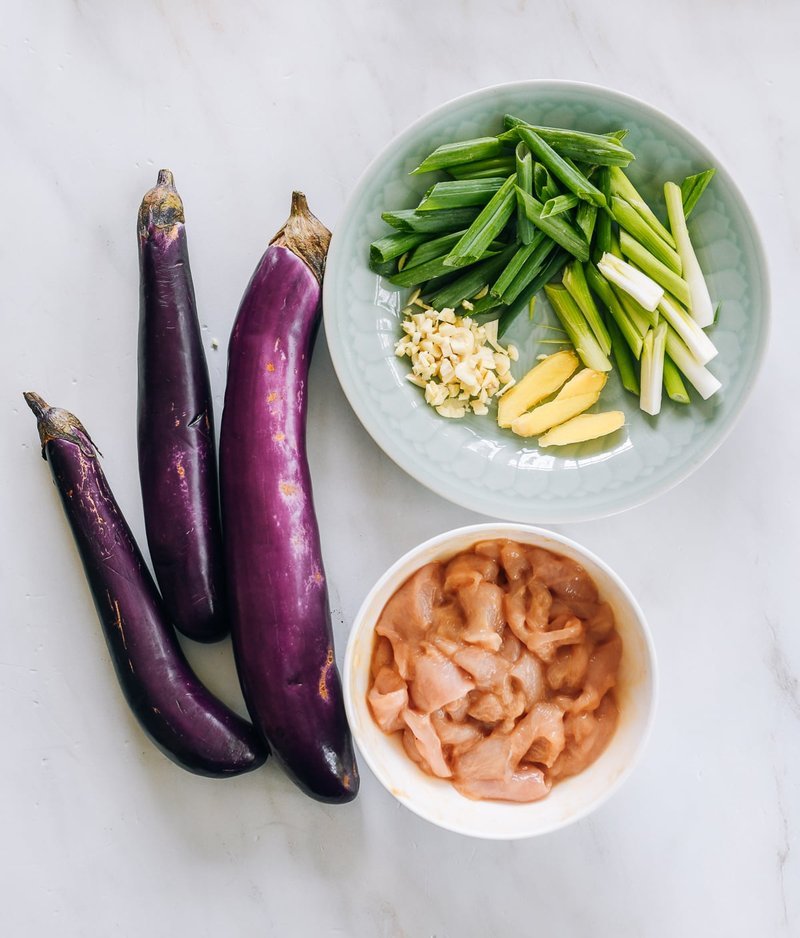
This recipe serves four. Total time is about 35 minutes — 20 minutes of prep, 15 minutes of cooking. You will need a wok, or a big stainless-steel skillet. If you do not have a wok, go with the skillet. It will work.
Ingredients
For velveted chicken:
- 12 oz chicken breast, thinly sliced against the grain
- 2 tbsp water
- 2 tsp cornstarch
- 2 tsp neutral oil (vegetable or canola)
- 2 tsp oyster sauce
For the stir-fry:
- 1 lb Cantonese eggplant (about 2-3 entire), cut on the diagonal into triangular chunks
- 4 tbsp neutral oil, divided (canola, vegetable, or avocado)
- 1½ tbsp oyster sauce
- 1 tbsp light soy sauce
- ¼ tsp sesame oil
- ¼ tsp salt
- ¼ tsp white pepper
- 3 thin slices of ginger, plus juice
- 3 cloves garlic, minced
- 3 scallions, cut into 2-inch pieces, white and green parts separated
- 2 tbsp Shaoxing wine (or dry rice wine)
- 2 tbsp water (optional, if the pan gets too dry)
How to make it
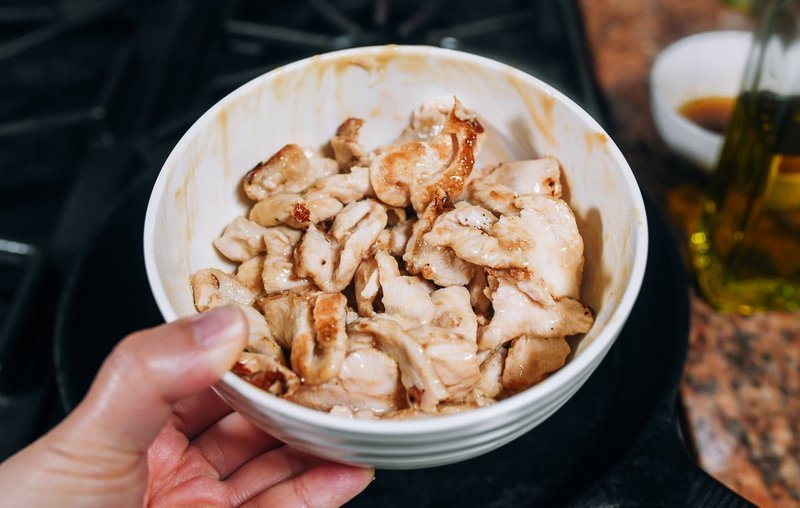
- Add chicken to a small bowl. Combine with water, cornstarch, oil, and oyster sauce. Stir until the chicken soaks everything up, then set aside while you prep the rest.
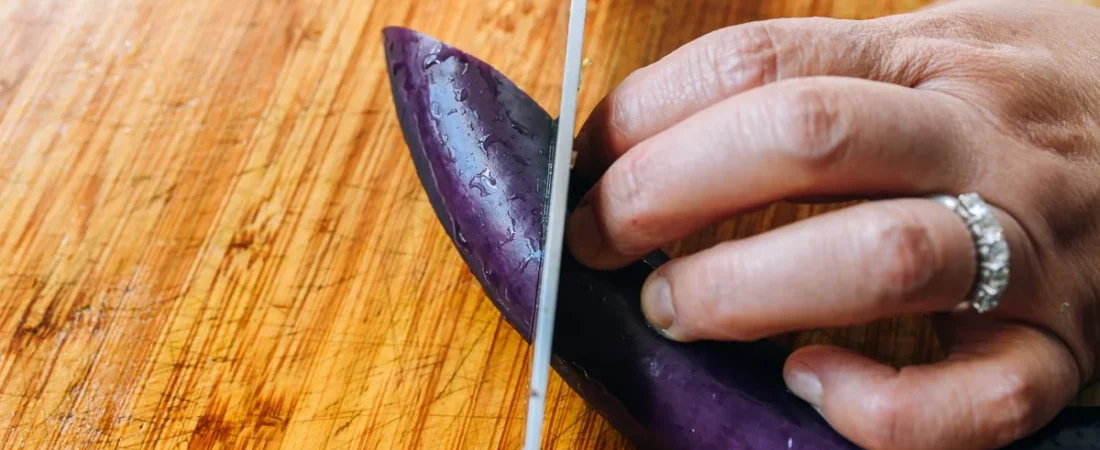
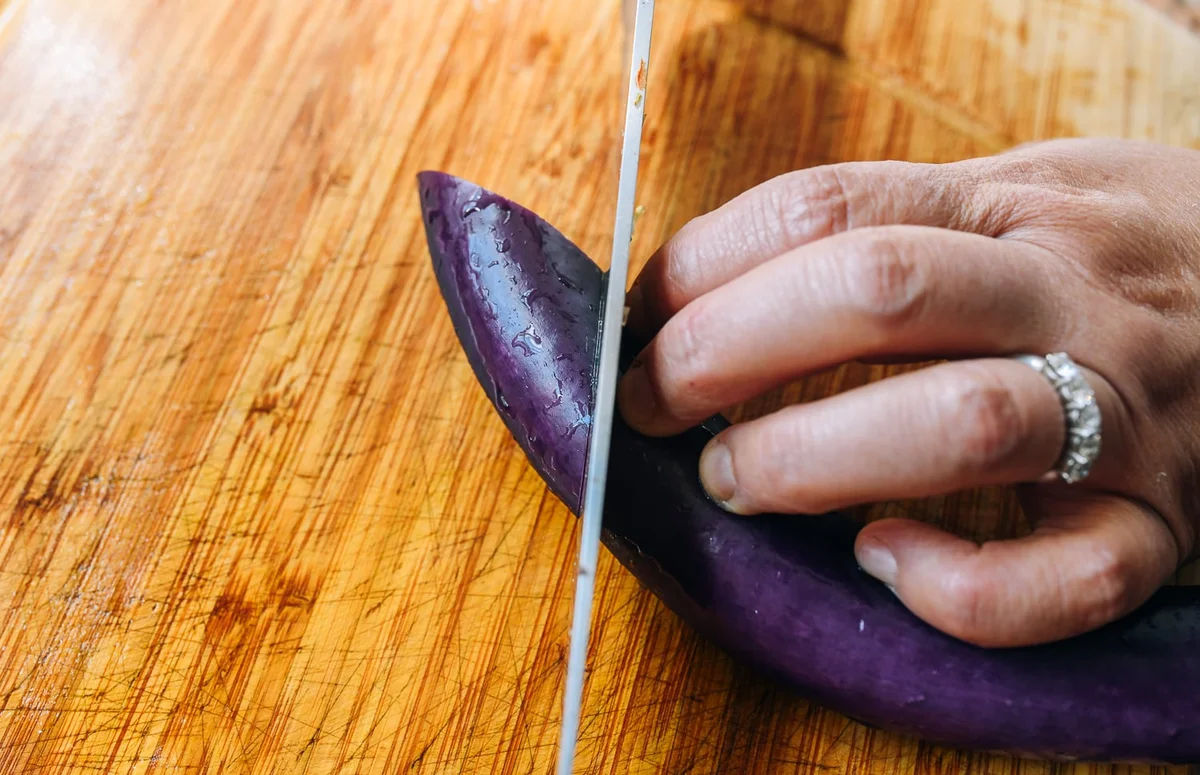
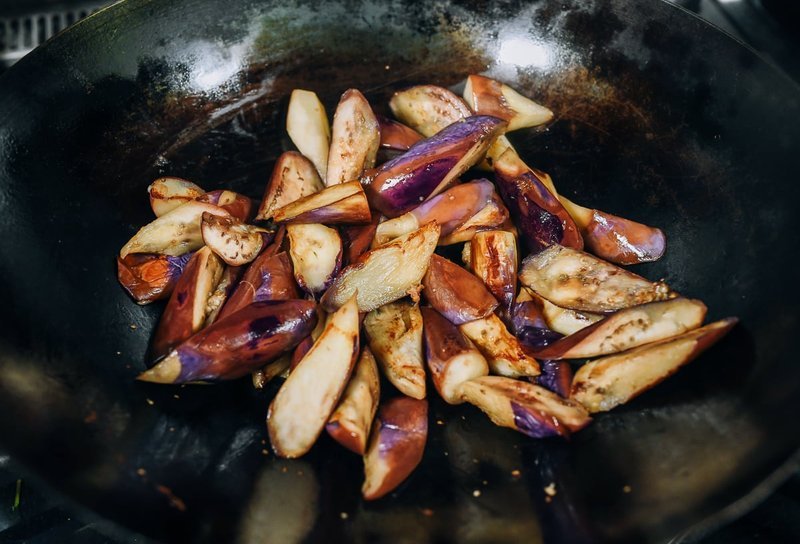
- Cut the Cantonese eggplant on the diagonal into triangular chunks. The angular cut gives you a large surface area for the sauce to stick to.
- Heat the wok over medium-high until it just starts to smoke. If you are using a stainless-steel skillet, preheat it until a drop of water bounces and beads on the surface.
- Add 3 of the 4 tablespoons of oil and the eggplant. Stir immediately to coat — Cantonese is fast and soaks up oil right away. Cook over medium for 5-6 minutes. Do not turn the heat too high; it will burn the outside. Set aside in a bowl when the eggplant is slightly tender but not paste-like.
- Wash the wok or pan. Give it a quick cool with cold water before you scrub — you are removing any eggplant residue or moisture that would burn or stick when you sear the chicken.
- In a small bowl, whisk the oyster sauce, light soy sauce, sesame oil, salt, and white pepper. Set aside.
- Put the wok back over medium-high until it is dry and just starting to smoke again. Swirl in the last tablespoon of oil. Lay the chicken in a single layer and let it sear without moving it for about 2 minutes. Flip and cook for one more minute. Stir-fry until the chicken is about 80% cooked, then add it back to the bowl it was velveted in.
- Return the wok to the heat. Add the ginger, garlic, and white parts of the scallions. Stir-fry 30 seconds until fragrant.
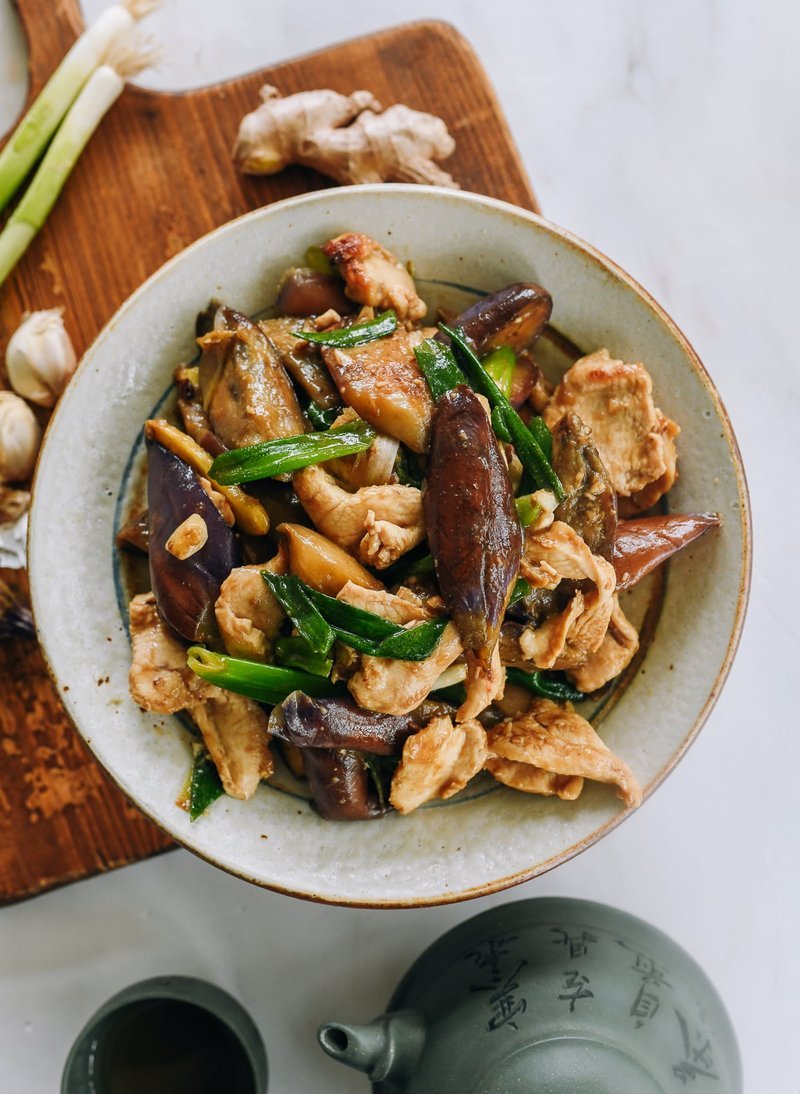
- Pour the wine around the edge of the pan to deglaze. Add the eggplant, the chicken, the pre-mixed sauce, and the green parts of the scallions. If the pan is too dry, add 2 tablespoons of water. Stir-fry everything together until thoroughly coated.
- Serve immediately over steamed rice.
Notes and swaps
Shaoxing wine is a dry Chinese cooking wine, sold at most Asian grocery stores. A dry sherry or mirin is a fine stand-in if you are in a bind. White pepper is the classic spice in Cantonese cooking — it gives the sauce a subtle, almost floral heat that black pepper does not have. If you do not have it on hand, use the same amount of black pepper; it will be noticeably different, but still in the right direction.
Oyster sauce is the backbone of the sauce here. If you are halfway through a bottle of oyster sauce and you have a sweet soy sauce on hand, you can swap — the flavor direction is the same, just a little less deep.
This recipe also scales. If you want to make it for two, cut everything in half and use a smaller pan. It still works.
A note from Nora
The first time I made this, I got greedy and put too much eggplant in the pan at once. It steamed instead of searing, came out grey and sad, and Sam politely asked for extra garden sauce with his rice. The second time I got it right, and the whole dish disappeared in about ten minutes with no one asking for seconds. So: do not crowd the pan. One layer of eggplant. You will thank yourself later.
And here is the real takeaway I keep coming back to: this is one of those recipes that gets better the more you make it. The first time you are easing the timing. By the third time, the pan is preheating itself while you slice the scallions. By the fifth time, it is just a Tuesday night that happens to end with one of the best Chinese dinners I know — made entirely at home. If I can do it on a Tuesday, it is a keeper.
Leave a Reply