
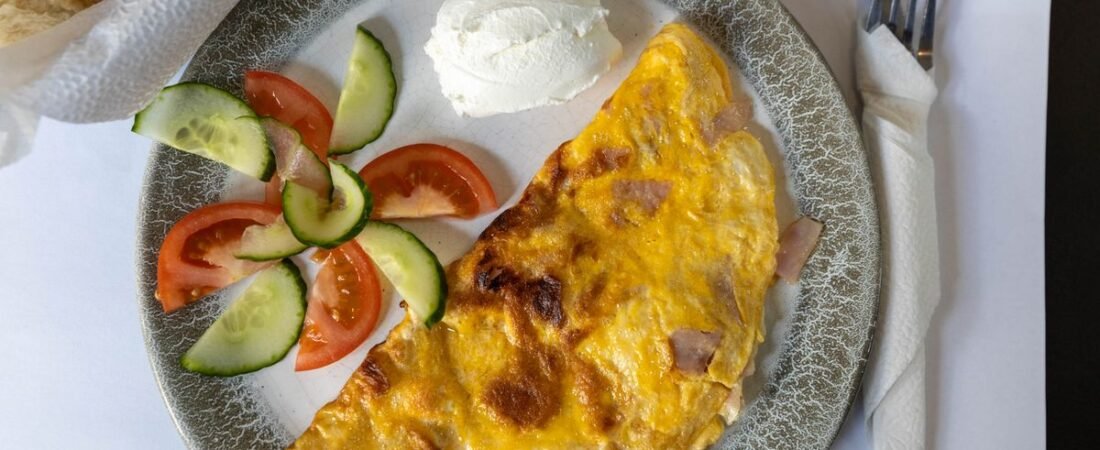
One morning in Venice, at a five-star hotel, I watched a waiter set down a breakfast that looked like it had been lifted straight out of a cloud. It was an omelette made entirely of egg whites — tall, puffy, soufflé-style, almost impossibly light. I remember thinking, I can make that. I just don’t know how yet.
Turns out it takes four ingredients and about 10 minutes, once you know the trick: whip the egg whites to soft peaks, then cook them gently under a lid. It’s high protein, low-carb, low fat — and it made my list of breakfasts worth remembering. This one passed the Tuesday test, so it’s staying.
Why this omelette is worth the fuss
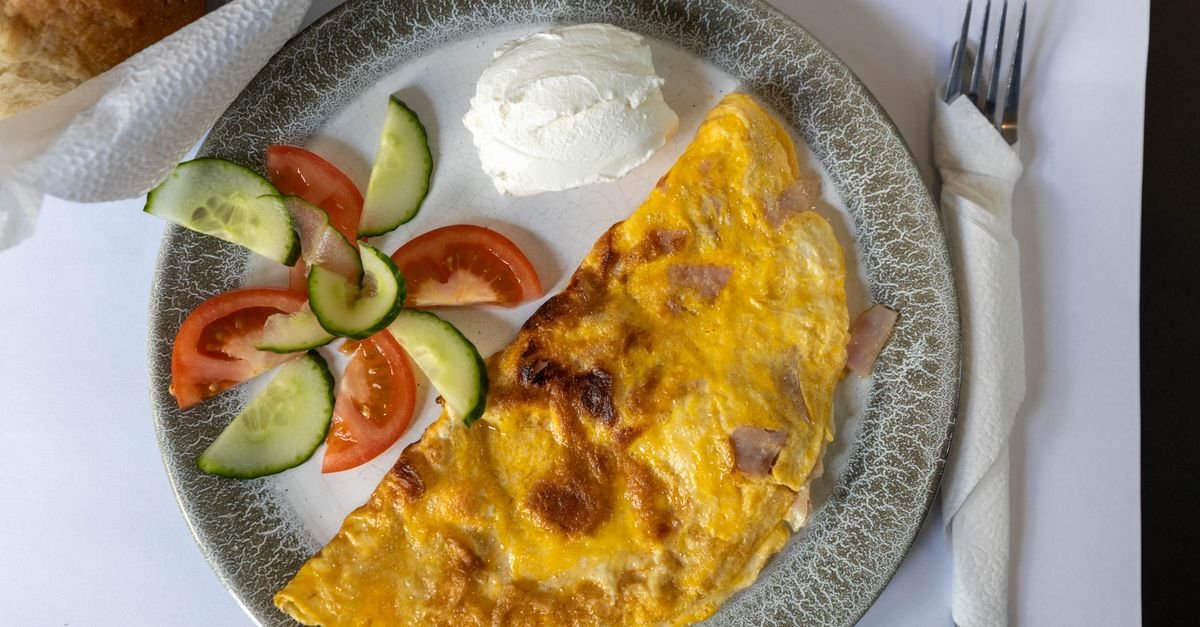
Compared to a traditional omelette, the egg white version is lighter and leaner — 10 grams of protein in an 83-calorie dish — and it feels special in a way that a plain scramble never quite manages. The texture is the whole point: it puffs up in the pan and melts in your mouth, like a soufflé that doesn’t demand an oven or 20 minutes of standing by it.
And it’s fast. Ten minutes total, start to finish. Want to feed two? Run two skillets at once — it’s one of those rare recipes that scales without any drama.
What you’ll need
- Egg whites — 3, from 3 large eggs. Worried about wasting the yolks? They’re great in homemade ice cream, hollandaise sauce, angel wing cookies, or crème brûlée. There’s no reason to pour them down the sink.
- Pinch of salt — seasons the whites and rounds out their mild flavor.
- Pinch of cream of tartar — a tasteless white powder from the spice aisle that stabilizes the foam so the omelette holds its height.
- 1 tsp butter — keeps everything from sticking and gives that golden color. For dairy-free, swap in avocado oil or a light olive oil (or a dairy-free butter).
Metric-friendly: 3 large egg whites is about 110 g, and 1 tsp butter is about 5 g. Everything else is by pinch.
How to make it
- Whip the egg whites. Put the egg whites, salt, and cream of tartar in a spotless bowl — any trace of grease kills the foam. Beat on medium with an electric mixer until foamy, then up to medium-high until glossy soft peaks form. The peaks should hold for a moment and curl over at the tips. Stop there. Over-beaten whites look dry and grainy, and they lose their volume in the pan.
- Heat the skillet. Set a 10-inch non-stick pan over medium-low heat. Melt the butter and brush it over the bottom and sides until it’s bubbling — light bubbling, not browning.
- Cook the omelette. Drop the heat to low, pour in the whipped whites, and spread them gently into an even layer, about 1 inch thick. Cover with a lid and cook 5 to 6 minutes. The lid traps steam and cooks the whites through, so there’s no flipping. It’s done when the bottom is lightly golden and the top is mostly set, barely sticky to a touch. Don’t overcook — that’s what makes it deflate.
- Fold and serve. Slide it onto a plate with a spatula and fold it in half right away, holding it in place for a few seconds so the fold sticks. It will settle a little on the plate — that’s normal. Top with chives and whatever else you’re after, and serve immediately, while it’s still tall and warm.
How do I know the whites are beaten right?
This is the step people get wrong, so here’s the test: tip the bowl sideways for a second. The whites should slowly slide, not pour out. The peaks should stand up and bend over at the tip — soft peaks, not stiff ones. If they look dry, grainy, or stand up straight like meringue, you’ve gone too far, and the omelette will lose its height in the pan.
Worth topping
These are built for toppings — they add flavor, color, and a bit of flair. My go-tos:
- Avocado or guacamole
- Tomatoes, pico de gallo, or salsa
- Chives or green onions
- Shredded cheese
- Sautéed mushrooms or caramelized onions
- Sour cream or crème fraîche
- Crumbled bacon
It’s also a natural brunch anchor — serve it alongside muffins, pancakes, breakfast potatoes, sautéed apples, waffles, or bacon, and you’ve got a full spread for the price of a few pantry staples.
Tips for the best soufflé omelette
- Soft peaks are the sweet spot. Under- or over-whipped whites both cost you height.
- Use a clean bowl. Metal or glass, completely grease-free. One drop of yolk or butter and the foam gives up.
- Use an electric hand mixer. A hand whisk can get you there, but it will take a long time and a lot of muscle. The mixer is a two-minute job.
- Cook immediately after whipping. Whipped whites start to liquidify as they sit — get them into the pan right away.
Storage notes
Honest truth: this is a make-it-and-eat-it-now breakfast. It’s at its best while tall, warm, and airy, and it will deflate and turn denser as it sits. If you have leftovers, let it cool briefly, then refrigerate in an airtight container within 2 hours of cooking and eat it within 1 to 2 days. To reheat, nuke it in short 15- to 20-second intervals until warm. Skip the freezer — thawed omelettes turn watery or rubbery.
Per serving (1 omelette): 83 calories · 10 g protein · 4 g fat · 1 g carbs · 11 mg cholesterol · 182 mg sodium
A note from Nora
The first time I made this, I over-whipped the whites by about thirty seconds and got a beautiful, deflated pancake of disappointment. Lesson learned, written into this recipe: stop at soft peaks. Now Sam asks for it on weekends, our daughter thinks the puffy height is hilarious, and Biscuit supervises from the floor. A cloud you can eat, in 10 minutes. If I can make it on a Tuesday, it’s a keeper.



Leave a Reply