
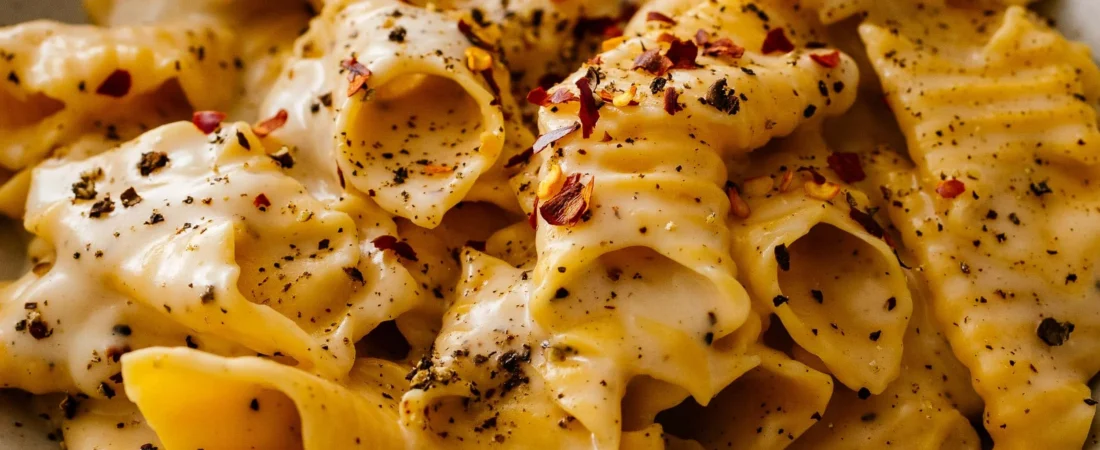
There is a version of cacio e pepe that lives in my head. Three ingredients, one pan, that glossy, peppery, impossibly glossy sauce you get at an Italian restaurant, the kind that makes you close your eyes on the first bite. It is also the version that fails on me more often than I’d like to admit. The cheese clumps. The sauce turns grainy. I stand over the pan at 6:15 on a Wednesday, wondering what I did wrong.
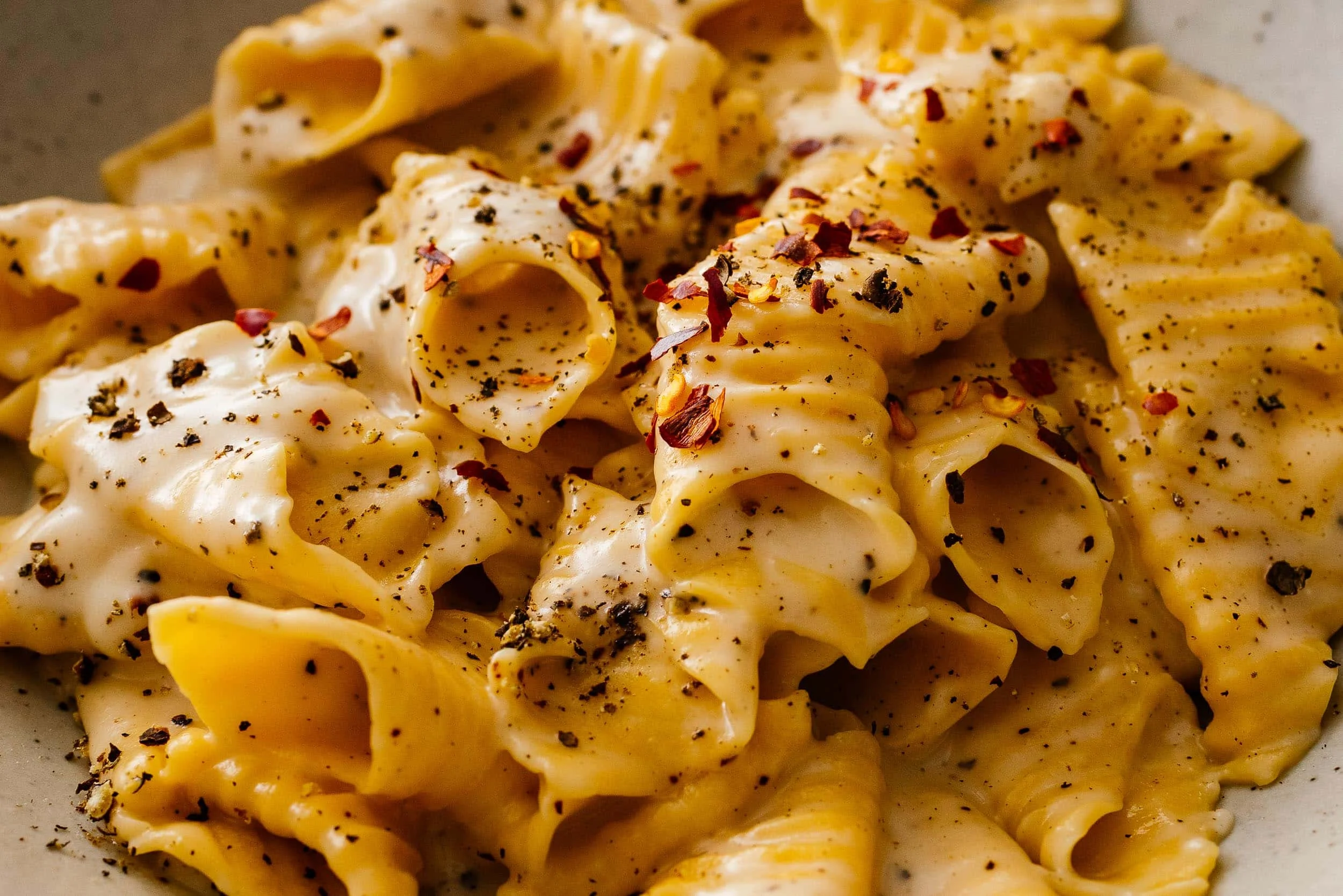
So I started making a different one. A cacio e pepe style pasta built on a mornay sauce: butter, pepper, flour, milk, and a mountain of pecorino. It is not the classic. But on the nights when the classic fights back, this one delivers every time, and it passed the Tuesday test without breaking a sweat.
The version that doesn’t fight back
Classic cacio e pepe relies on pasta water, cheese, and pepper emulsifying into a sauce. It is beautiful when it works. When it doesn’t, you get a cheese ball in a pool of starchy water, and no amount of whisking fixes it. This version thickens the sauce with flour first, then thins it back out with starchy pasta water. The result has more body and real clinging power, and the sauce stays smooth and glossy even when you do it a little wrong. (You will do it a little wrong. So will I.)
The pepper first, always
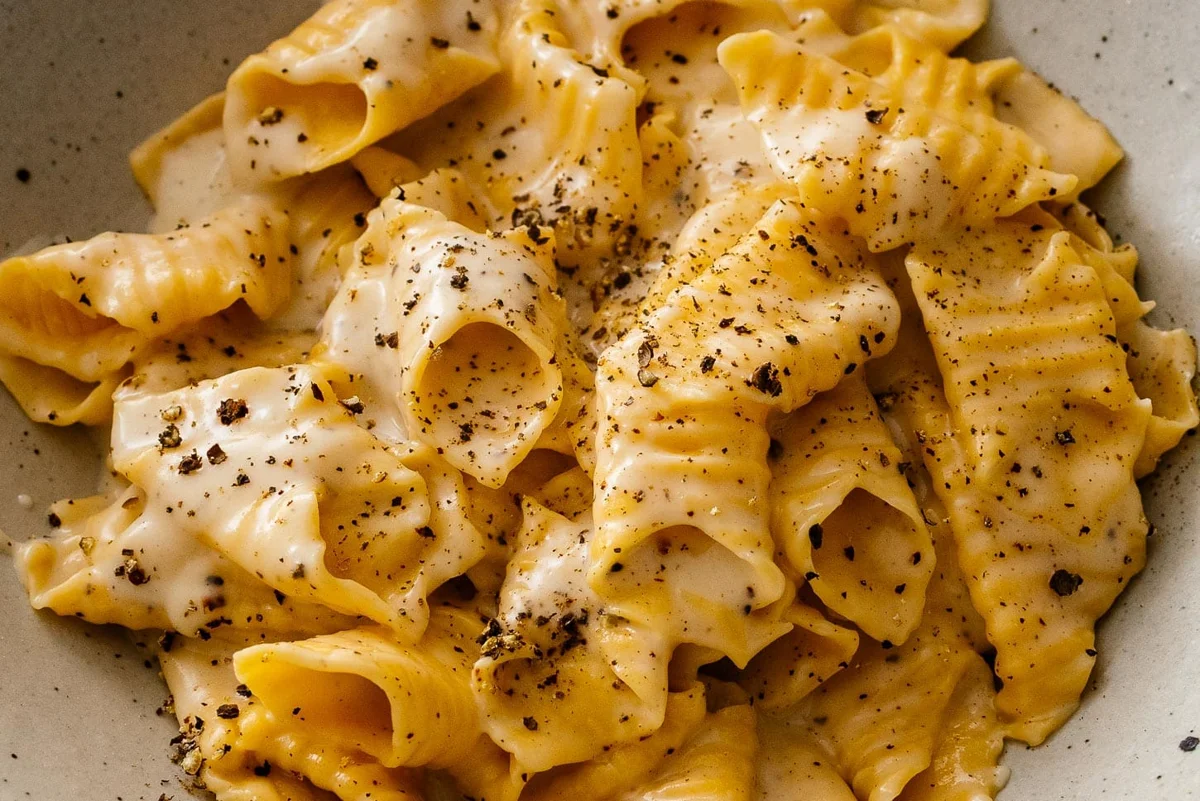
Start with butter in a skillet and a generous amount of freshly cracked black pepper. Black pepper is a key flavor in cacio e pepe, and toasting it in the hot butter coaxes out its spicy floralness. The heat draws the flavor out of the peppercorns and the butter carries it everywhere. Skip this step and the dish goes from complex to merely cheesy.
What is mornay sauce, anyway?
Mornay is a classic French sauce built off béchamel, a flour-thickened milk sauce. The traditional version uses gruyère, but this one uses pecorino, the cheese cacio e pepe is actually supposed to be made with. You can use parmesan if that is what is in your fridge. But if you see pecorino at the store, buy it. It is made from sheep’s milk instead of cow’s, so it is sharper, more intense, and less sweet than parmesan. If you have ever wondered why restaurant cacio e pepe tastes deeper than yours, the cheese is a big part of the answer.
Build the sauce
Once the pepper is fragrant in the butter, stir in the flour and cook it, stirring constantly, until every granule is coated in fat and the mixture is completely smooth. This is the part where you stay close to the pan: flour and fat is what gives the sauce its body later. Then pour in the milk in a thin stream, whisking the whole way. It may start out lumpy. That is fine. Keep whisking over low heat and it will turn into a thick, glossy paste. Take it off the heat and fold in the pecorino in batches. The residual heat melts the cheese, and the sauce will look a little lumpy at this stage. Do not panic. It is supposed to be very thick right now, and the pasta water is coming.
Here is the hack that makes this recipe my fallback for every weeknight: the sauce keeps. Pop the extra in a container in the fridge, and any night this week you get almost instant pasta. Heat it, whisk in some hot pasta water, toss it with whatever pasta you have. I have done this on more than one night where dinner needed to happen by seven and my energy said otherwise.
The reassembly
Cook your pasta in well salted water until just shy of al dente. Meanwhile, bring the sauce back over medium-low heat and whisk in hot starchy pasta water, a splash at a time, until it loosens up into something pourable. Toss in the drained pasta, adding more pasta water as needed until the sauce clings to every piece. Finish with extra cracked pepper, and a little crushed red pepper if you like the heat.
The pasta in my photos is homemade fresh egg garganelli, which is a whole project of its own. Any sturdy shape works here, and honestly, the night this recipe earned its place in my rotation, I used the dry rigatoni that was already in the pantry. It is the sauce that is the point.
Super Creamy Cacio e Pepe Style Pasta
A silky, protein-packed cacio e pepe style sauce for nights when you want mac-and-cheese comfort but are trying to adult. Serves 2. Prep 5 minutes, cook 15, on the table in 20.
Ingredients
- 1 tbsp butter
- 1 tsp freshly cracked black pepper
- 1 tbsp flour
- 1/2 cup whole milk
- 3 oz finely grated pecorino (about 1.5 cups)
- 1/4 cup pasta water, more as needed
- 6 oz pasta (I used homemade garganelli; any sturdy shape works)
Method
- Melt the butter in a skillet over medium heat, add the pepper, and let it toast in the butter as it melts, stirring until fragrant, about a minute.
- Stir in the flour and cook, stirring constantly, for about three minutes, until completely smooth and every granule is coated in fat.
- Pour in the milk in a thin stream, whisking constantly. It may start lumpy; keep whisking over low heat until it becomes a thick, smooth paste.
- Remove from the heat and stir in the pecorino in batches until melted. The sauce will be very thick and a little lumpy. That is normal.
- Meanwhile, bring a pot of salted water to a boil and cook the pasta until just shy of al dente.
- Reserve a cup of the pasta water, then drain. Bring the sauce back to medium-low heat and whisk in 1/4 cup of the hot starchy water until smooth and glossy.
- Add the pasta and toss, adding more pasta water a splash at a time until the sauce coats every piece. Finish with extra black pepper, and crushed red pepper if you like.
Notes
The sauce keeps well refrigerated in a sealed container for about a week; reheat gently with a splash of pasta water or milk. Swapping parmesan for the pecorino works in a pinch, but pecorino is where the depth comes from. Nutritional estimates per serving: 545 calories, 22.8g protein, 63g carbs, 19.6g fat.
Loosely based on this recipe from iamafoodblog.
A note from Nora
The first time I made this, I got impatient at the milk stage, dumped it in all at once, and ended up with a lumpy white soup that Sam ate anyway and called “peppery.” He always eats whatever I make, so that is high praise and low praise simultaneously. The second time, I poured it in slowly like the recipe says, and the difference was the difference between soup and sauce. This one is in my rotation now: 20 minutes, five real ingredients, and it is the answer on the nights when classic cacio e pepe is having a moment. If I can make it on a Tuesday, it’s a keeper.
Leave a Reply