
The fridge light comes on at 6:40 every night when I’m grabbing a glass of water, and every single time, the sourdough starter jar is in there. It has been sitting for a week. It looks tired. I feel a little guilty about it, the way you do about a plant you forgot to water.
Turns out that tired, forgotten jar is exactly what this focaccia wants.
A note on the title: yes, sourdough starter contains wild yeast. “No yeast” here means no commercial yeast — no packet, no pinch from the bakery aisle. The slow wild fermentation does the work on a long, forgiving timeline, which is why this recipe is so lenient with busy people. The discard does need to be healthy and recently fed, though — not a sad, flat one that’s been in the back of the fridge for three weeks.
Why this one made it into my rotation
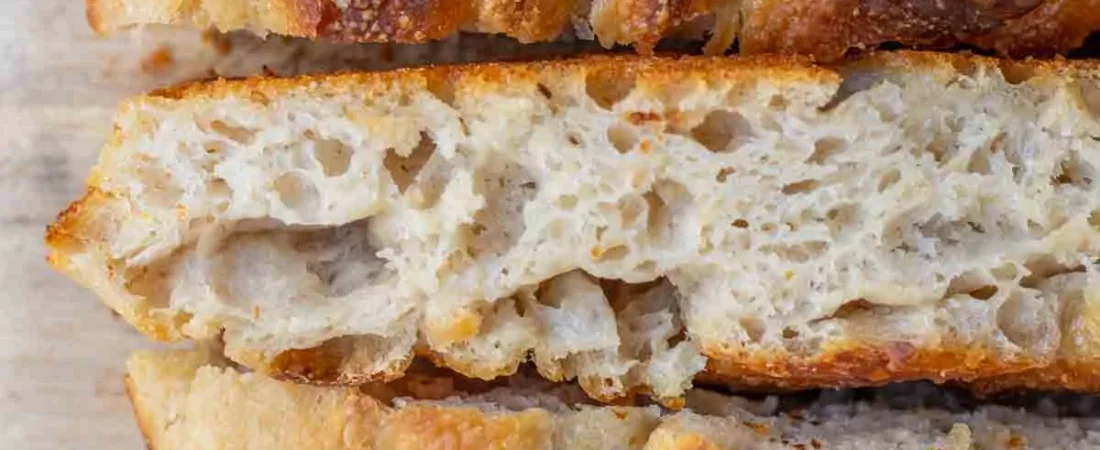
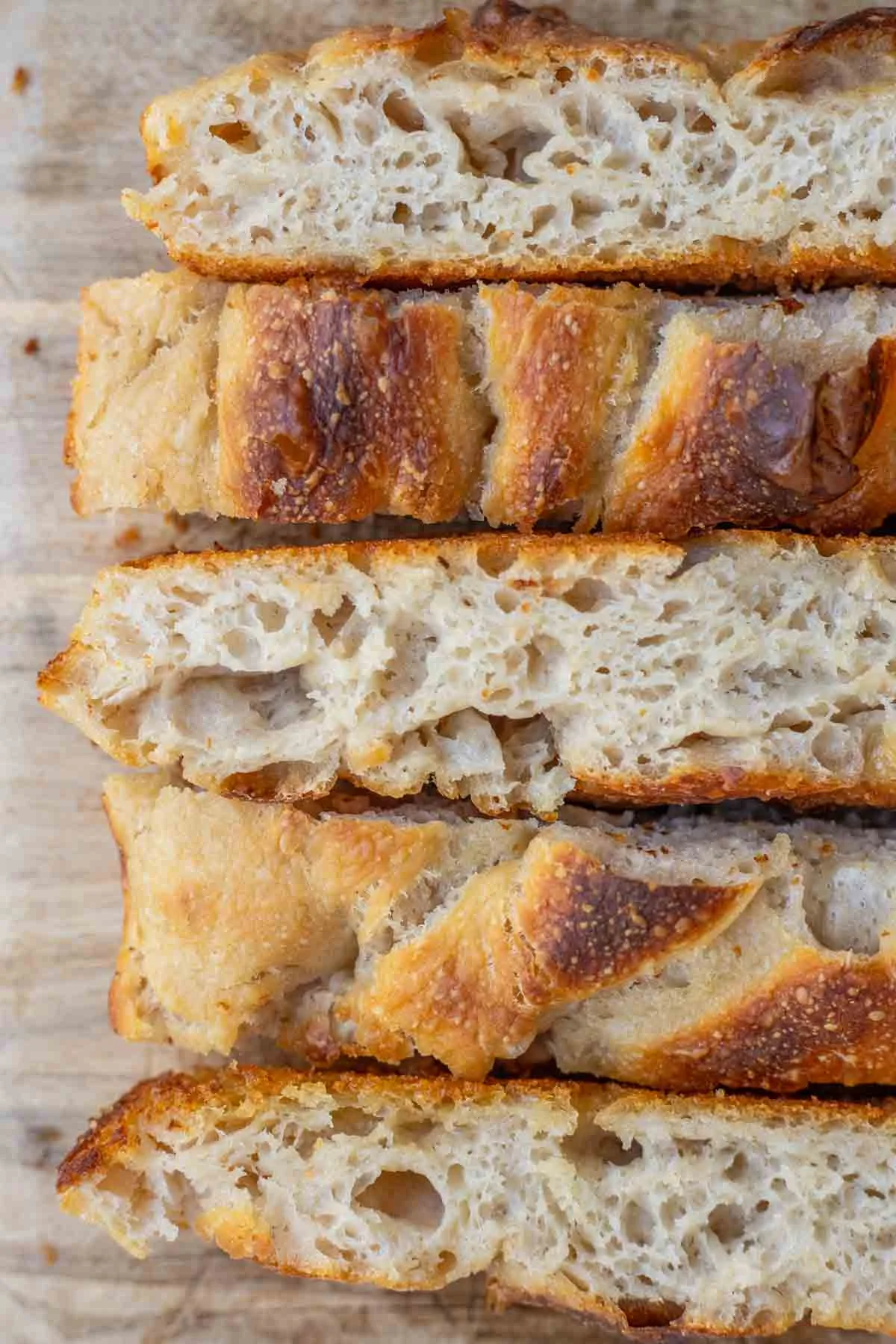
Focaccia is the bread I make when I want the kitchen to smell like an Italian trattoria but don’t want to pay the price. Light, open crumb, big air pockets, olive oil doing all the talking, and a crisp golden top that shatters when you tear off a piece. It goes with pasta, soup, a simple cheese plate — or just honest butters up all day long.
It’s also one of the most forgiving recipes I own. You can start it in the morning, go do your entire life, and bake it at whatever hour you actually care about. That matters when your weekdays are swim sets, dry cleaning and a plate of leftovers at 7. If I can make it on a Tuesday morning and still have it to eat for Thursday breakfast, it’s a keeper.
What you need
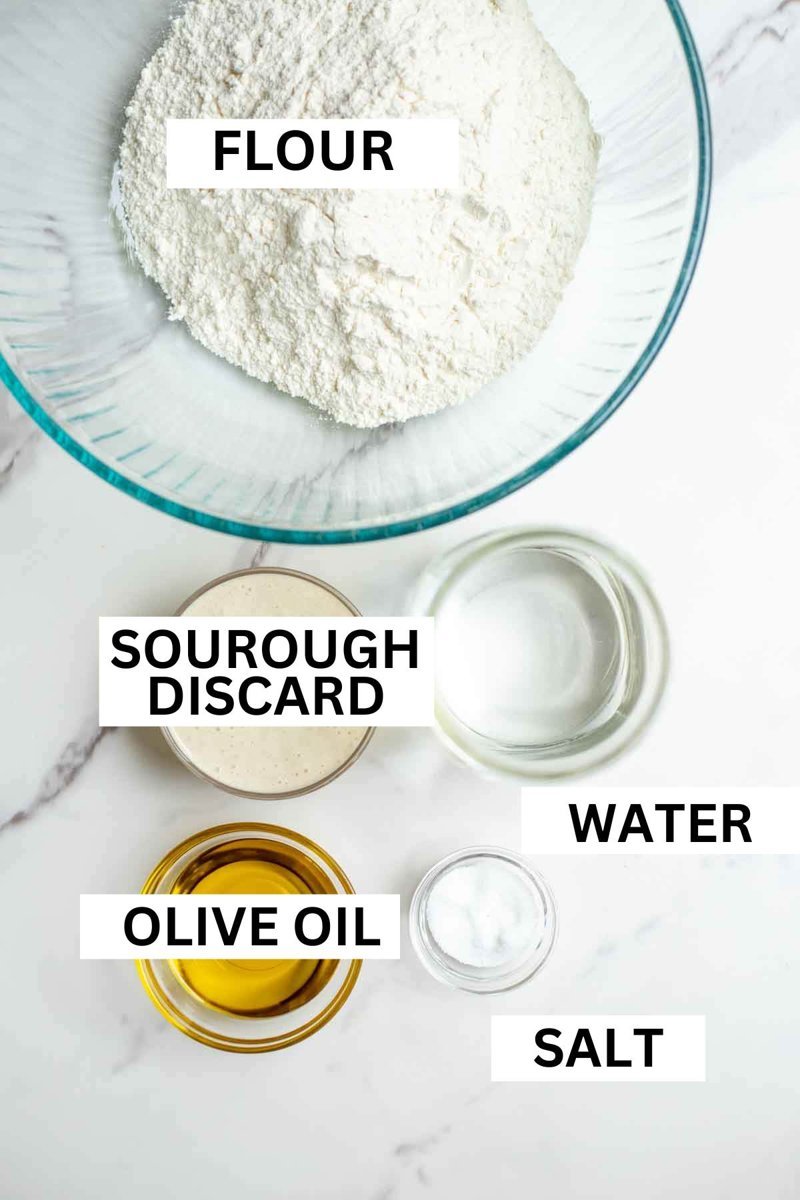
- 500 g bread flour (about 4 cups) — all-purpose works fine
- 150 g unfed sourdough starter (about ⅓ cup), healthy and recently fed — a fed-up starter works too, if that’s what you have on hand
- 400 g water (about 1⅔ cups)
- 10 g salt (about 2 tsp)
- ¼ cup olive oil, good quality — the flavor lives here, so don’t skimp
Tools: a large bowl, a kitchen scale, and a 9×13 baking dish. That’s the whole shopping list.
High-hydration warning: this dough is wet. It will feel loose and sticky, and that is the point — the steam from that water is what puffs up those big bubbles. Don’t panic-add flour.
How to make it
There are about ten minutes of active work in the whole recipe, spread out over a day. The clock is on your side.
- Mix. In the large bowl, stir the flour, starter, water, and salt together until fully combined and a shaggy dough forms. Cover and let it rest 30 minutes.
- Fold. Do one set of stretch and folds (wet your hands if it’s too sticky — it will be). Cover, rest 30 minutes, then do a second set. The folds are optional but they’re what keep the crumb open.
- Bulk ferment. Cover and let the dough rise 6 to 8 hours, until it’s very bubbly and has a soft, airy feel. The rising time will depend on how warm your kitchen is — cooler means longer. Slightly over-fermented focaccia bakes just fine, so this one is very forgiving.
- Prep the pan. Pour about 2 tablespoons of the olive oil into the 9×13 dish and spread it across the bottom and up the sides.
- Shape. Transfer the dough to the pan and spread it out gently with your hands. Cover and let it rise 1 to 2 hours, or longer if needed, until doubled and full of bubbles. Craving a slower route? Cover the pan, put it in the fridge overnight, and bake in the morning — the cold ferment deepens the tang.
- Dimple. Preheat the oven to 425°F. Drizzle the remaining olive oil over the top and press it in with your fingertips to make the classic dimples. Add your favorite toppings.
- Bake. 25 to 35 minutes, until deep gold and brown. Pull it out when it sounds hollow where you tap the crust — this is a bread that performs best fresh out of the oven.
Serve it warm, torn into rough slices, with plenty extra olive oil for drizzling.
Toppings and variations
The basic version is a blank canvas. I’ve made it:
- flaky salt and fresh rosemary — my default, and the one that never needs a second opinion
- garlic and olive oil, just before baking
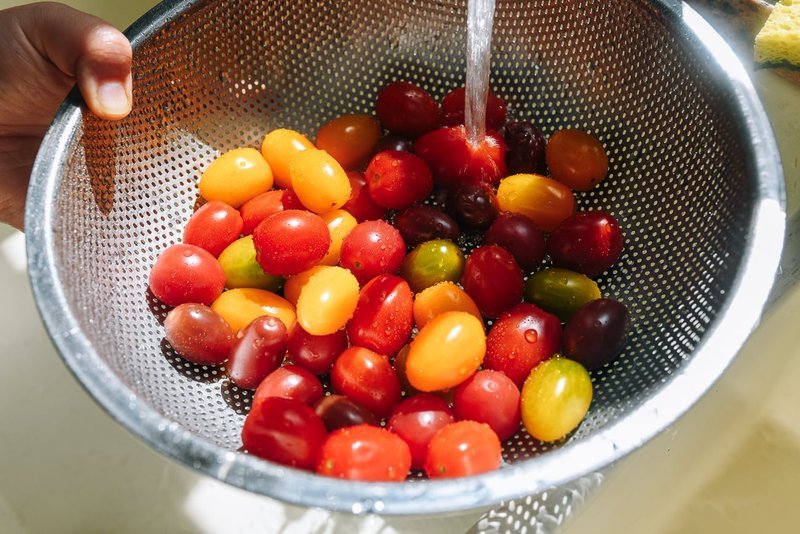
- halved cherry tomatoes, sunk into the dimples
- caramelized onions, for depth that turns sweet
- shaved parmesan, added in the last few minutes
- everything bagel seasoning — Sam’s favorite, and I’ve stopped fighting it
- cinnamon sugar — the sweet version that disappears by lunch
Roasted garlic or carmely onion stirred into the dough itself works too, and this leftover dough is secretly a pizza base if you ever want a Monday pizza night.
What I’ve learned
- Don’t worry about perfect timing. Let the dough tell you — it should be giggly and bubbly. Over-fermented focaccia is fine.
- Rise time follows temperature. Cool kitchen, more patience. Warm kitchen, less. Watch the dough, not the clock.
- Use plenty of olive oil. That’s where the flavor and the texture come from.
- Bubbles are the signal. When you see them, the dough is ready.
- The discard already gives this a tangy flavor, so skip the long cold ferment if you don’t need the sourness.
- Sticky is normal for a high-hydration dough. Wet hands, calm hands, keep going.
Storing leftovers
Focaccia is best the day it’s baked, but it keeps better than you’d expect if you handle it right.
- Room temperature: once it’s completely cool, wrap it tightly in plastic wrap or an airtight container. It’ll keep for up to two days. The crust softens, but the inside stays moist. To bring back the crunch: reheat slices in a 350°F oven for 5 to 7 minutes, or toast them cut-side down in a dry skillet.
- Freezer: slice it, wrap each piece in plastic, and bag it all up. Keeps for up to three months. From frozen, 10 to 12 minutes in a 375°F oven until warm through and crisp at the edges.
- Skip the fridge. The cold dries bread out faster than the counter does. If it won’t get eaten within two days, it’s going straight to the freezer.
FAQ
Per serving (makes about 10 slices): 242 kcal · 39 g carbs · 6 g protein · 6 g fat (1 g saturated) · 391 mg sodium · 1 g fiber.
Can I use active sourdough starter instead of discard? Yes, easily. Discard is what makes this recipe fast and keeps the pantry tidy, but a fed-up, healthy starter works just the same.
Can I make this ahead? That’s the whole point. After step 5, cover the pan, refrigerate it overnight, and bake in the morning. The cold ferment adds a slower, deeper tang.
Why is my dough so sticky? It’s a high-hydration dough, so stickiness is normal — that’s the texture, not the mistake. If it claws at your hands, wet them. Only add a little more flour if you really must, or you’ll tighten up the crumb.
Do I need to do the stretch and folds? Not strictly. The dough is forgiving and will work even if you keep it simple. But the folds build structure, and they’re how you get that open, airy crumb — so I always do them.
A note from Nora
The first time I made this, I pulled it out of the oven maybe ten minutes early because the house had gone quiet and I wanted to see what was happening under that crust. It was still beautiful. My daughter took the largest piece. Sam took the second largest. The kitchen smelled like it had hosted a small celebration, and the fridge was one fewer guilty jar for the week.
Maybe that’s what small rituals are for — they don’t fix anything, but they remind you that even an ordinary Tuesday can hold something lovely. If I can make it on a Tuesday, it’s a keeper.

Leave a Reply