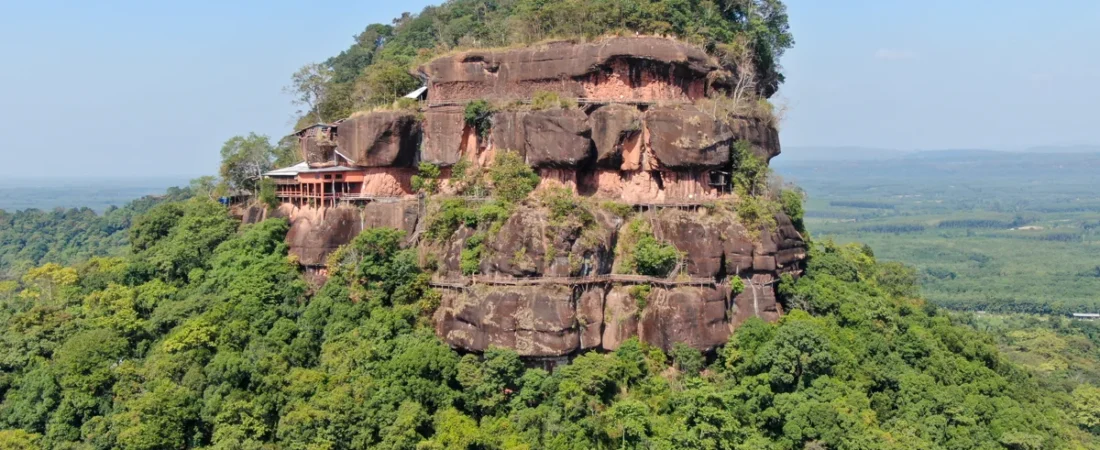
“The sixth level is the most spectacular—and most scary.” Several people warned me as we passed on the narrow stairs, and I admit my heart started racing before I even reached it.
This is Wat Phu Tok in Bueng Kan province, deep in Thailand’s rural northeastern Isan region. If you love places that feel untouched, this is one of them. Endless space, quiet skies, a mountain that just appears out of nowhere like someone forgot to hide it behind the flat landscape.
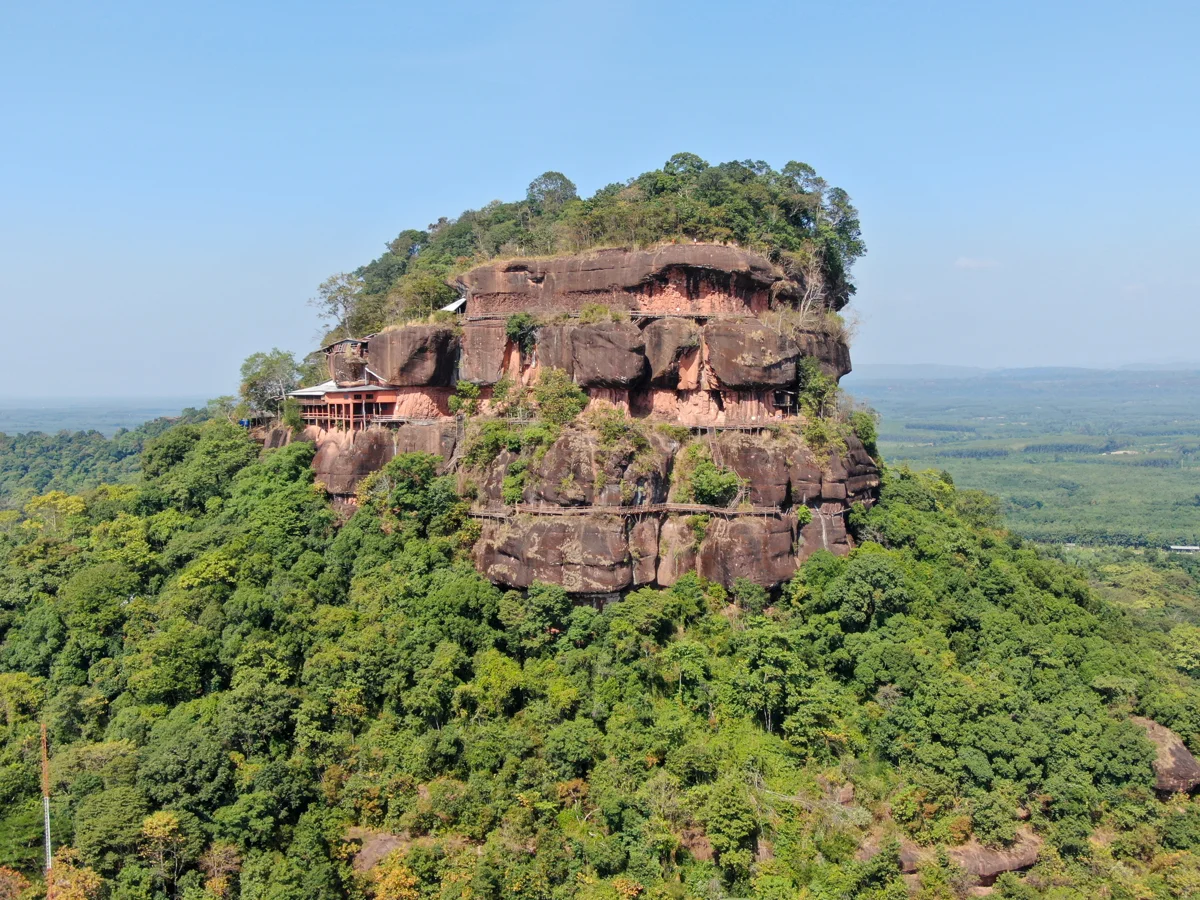
The official name is Wat Jetiyakhiri, but everyone calls it Wat Phu Tok—”Phu Tok” being the local name for the mountain and “Wat” meaning temple. The mountain rises 359 meters from the surrounding plains and literally translates to “lonely mountain.” You’ll understand why within seconds of arriving.
It reminded me of a smaller, more intimate version of Sigiriya in Sri Lanka—that same sense of ancient rock rising dramatically from the green below.
A Brief History
The mountain has always been wild terrain, home to dangerous snakes and thick with vegetation. That combination—isolation, nature, a touch of danger—made it perfect for meditation.
Monk Luang Pu Juan founded the temple here and began building wooden staircases, ladders, and walkways across the mountain, connecting shrines and meditation spaces. Over time, seven levels were constructed to mirror the seven stages of Buddhist meditation. Tragically, Luang Pu Juan died in an airplane accident before seeing it all completed, but Wat Phu Tok remains one of the most striking temples I’ve ever visited.
The Climb
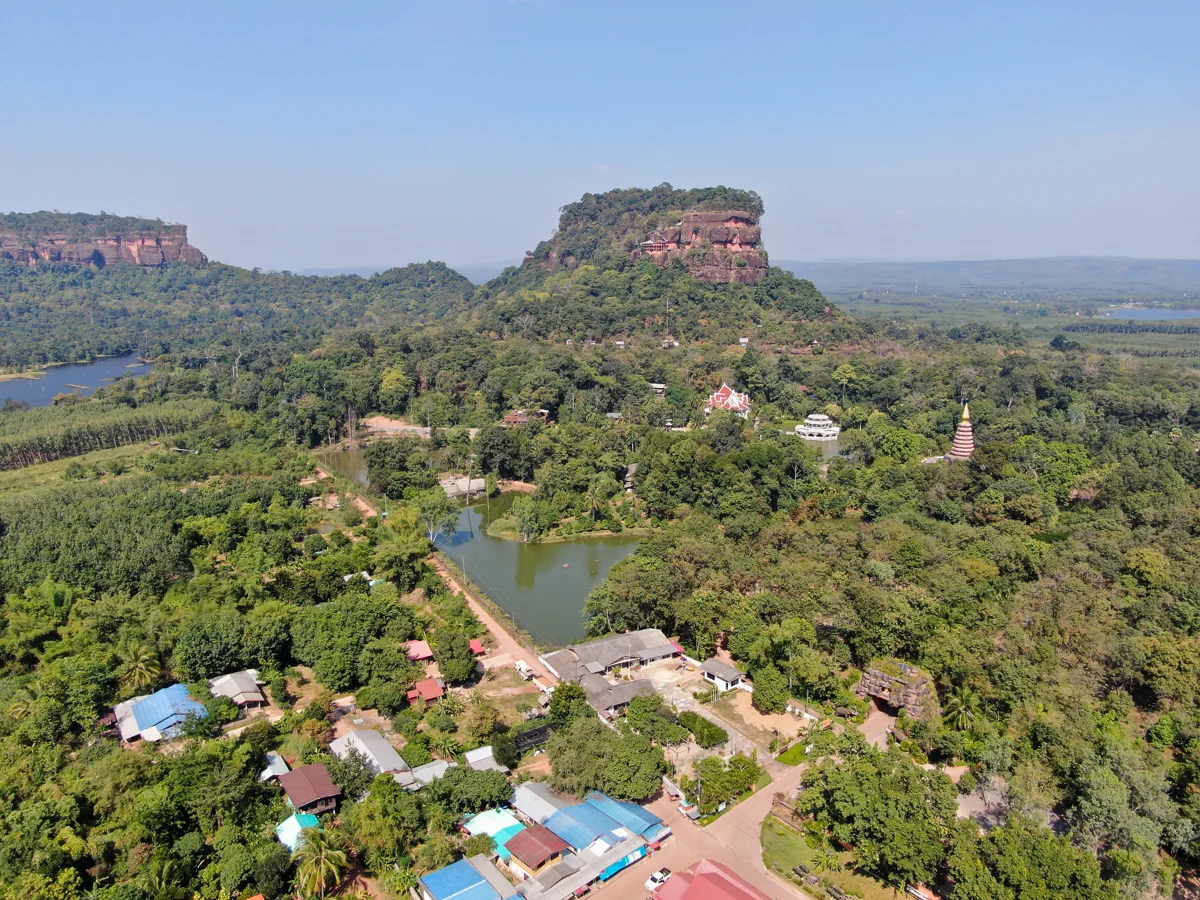
It’s about a 30-minute drive from Bueng Kan city. At the base there’s a large temple complex, a big lake, and plenty of parking—or you can grab a taxi or tuk-tuk if you’re staying in town.
You can’t miss the trail entrance. Just head toward the mountain, pass through the gate, and pretty quickly the concrete path gives way to wooden plank staircases. The first stretch is gentle enough that I barely noticed I was hiking.
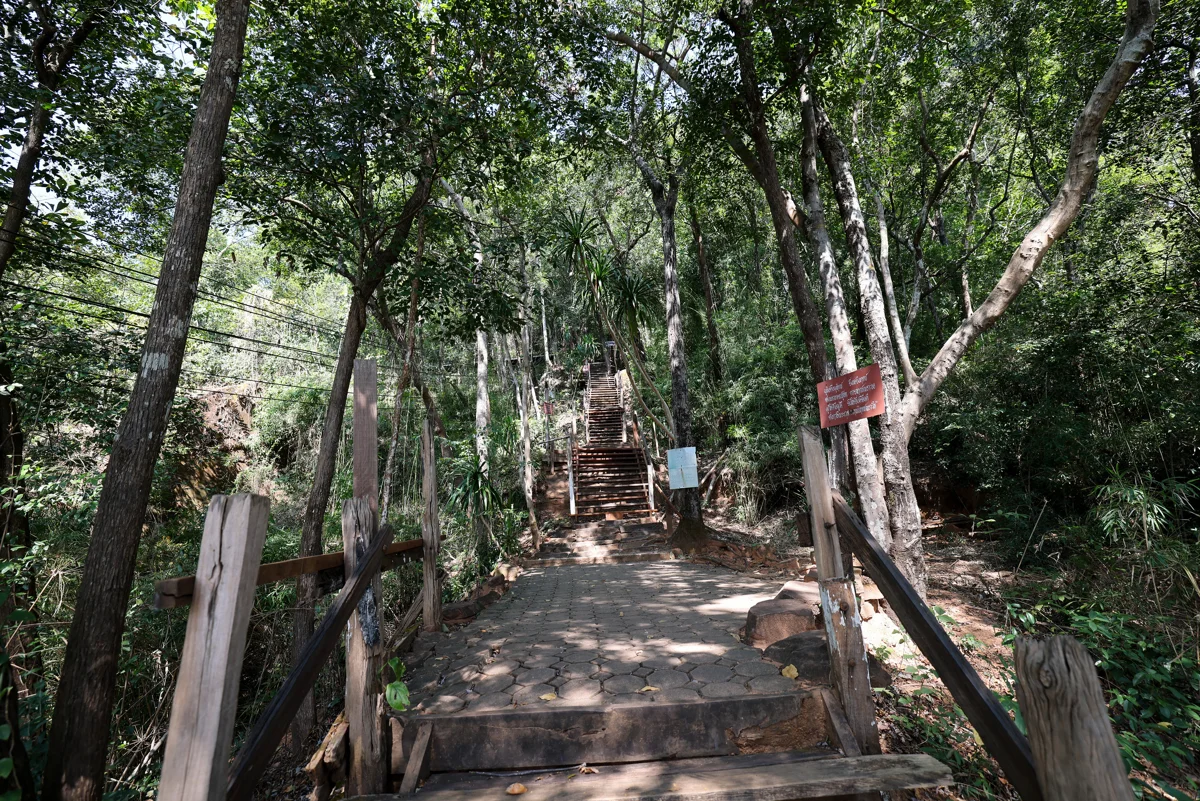
Then the stairs steepen until they’re basically ladders. Some of the planks flex underfoot and sit at an odd angle, but the whole structure felt solid. I’m not usually someone who seeks out heights, so I’ll be honest—I was both impressed and a little nervous.
The first few levels don’t have much to see. There are some shrines here and there, but the real experience is higher up. Keep climbing.
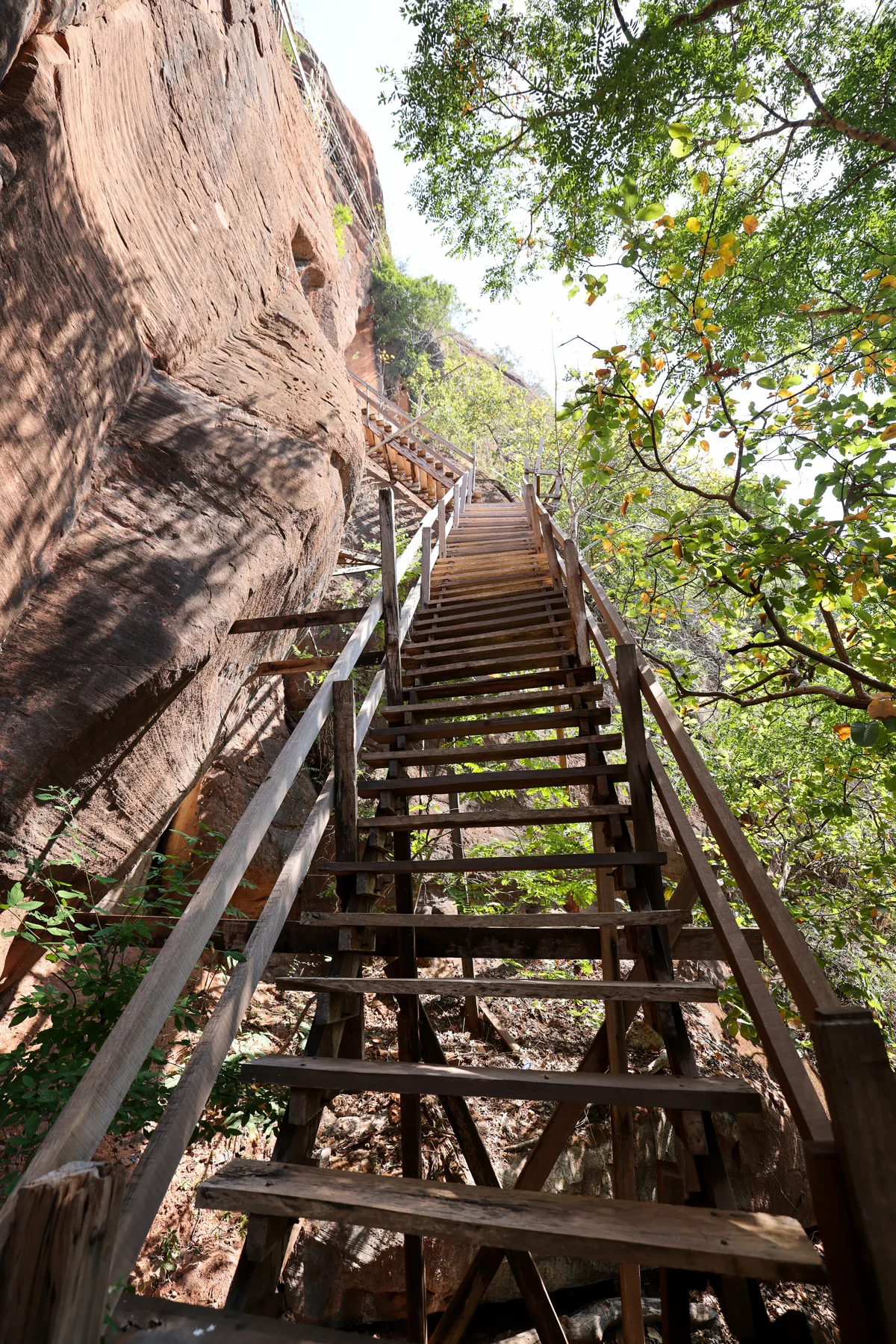
Levels Five Through Seven
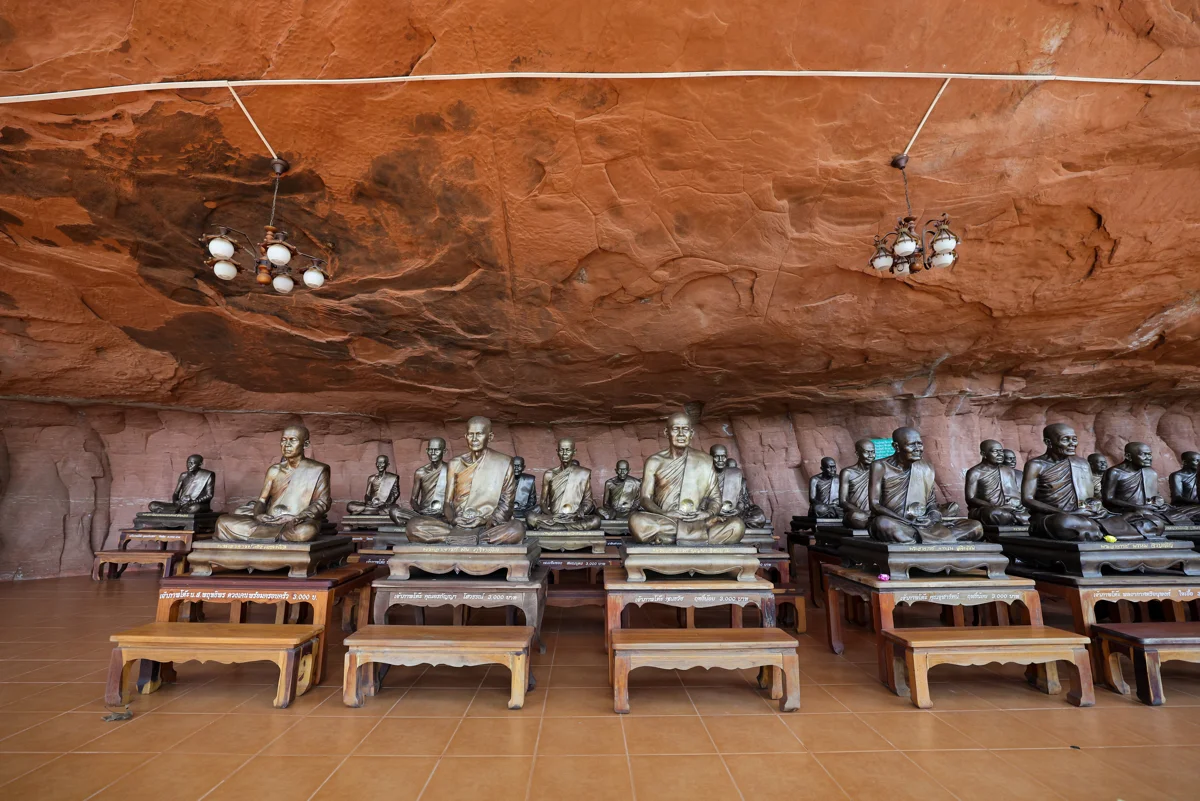
Level five is where things open up. This is where you’ll find most of the temples, shrines, and halls clustered together. The trail here stays on solid ground rather than clinging to cliff edges, so it feels like a breather before what comes next.
I think the largest ordination hall sits at this level—a beautiful space that’s easy to miss if you’re rushing upward.
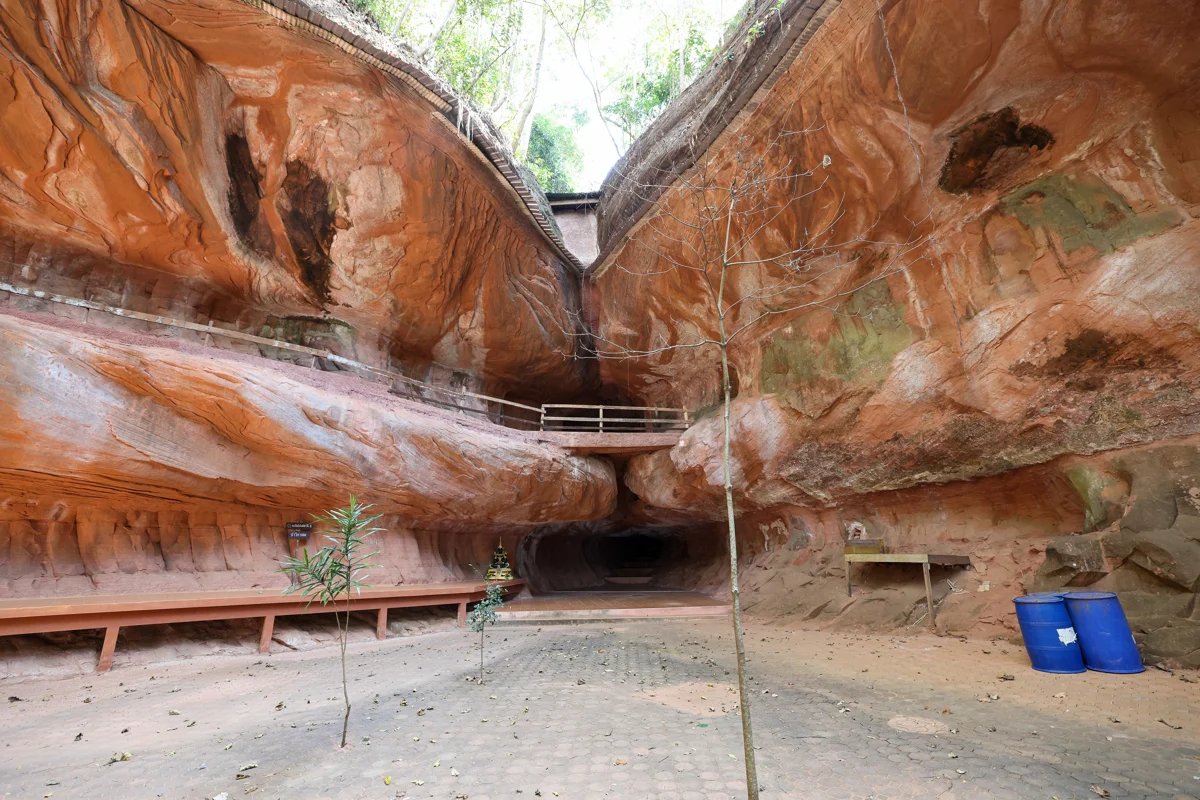
There’s also a small detour off the main trail worth taking. Follow the path and suddenly you find yourself on an elevated rock walkway leading across a wooden bridge to a tiny temple perched at the edge of the mountain. It’s brief, but it felt like finding a secret.
Then comes level six—the one everyone warned me about. About half of this level consists of wooden plank walkways anchored directly into the cliff face. The other half is on solid ground, but obviously you want to be on the cliffside portion.
This is the highlight. No question. Walking along those planks with the Mekong River basin stretching out below and the green canopy of Bueng Kan rolling in every direction—it was equal parts thrilling and terrifying. The breeze up there made it feel even more real, like I could fall through if I looked down too long.
Watch your step. There are no railings or safety lines, and one slip would be serious business. But the walkways felt stable and well-maintained, so I pushed forward.
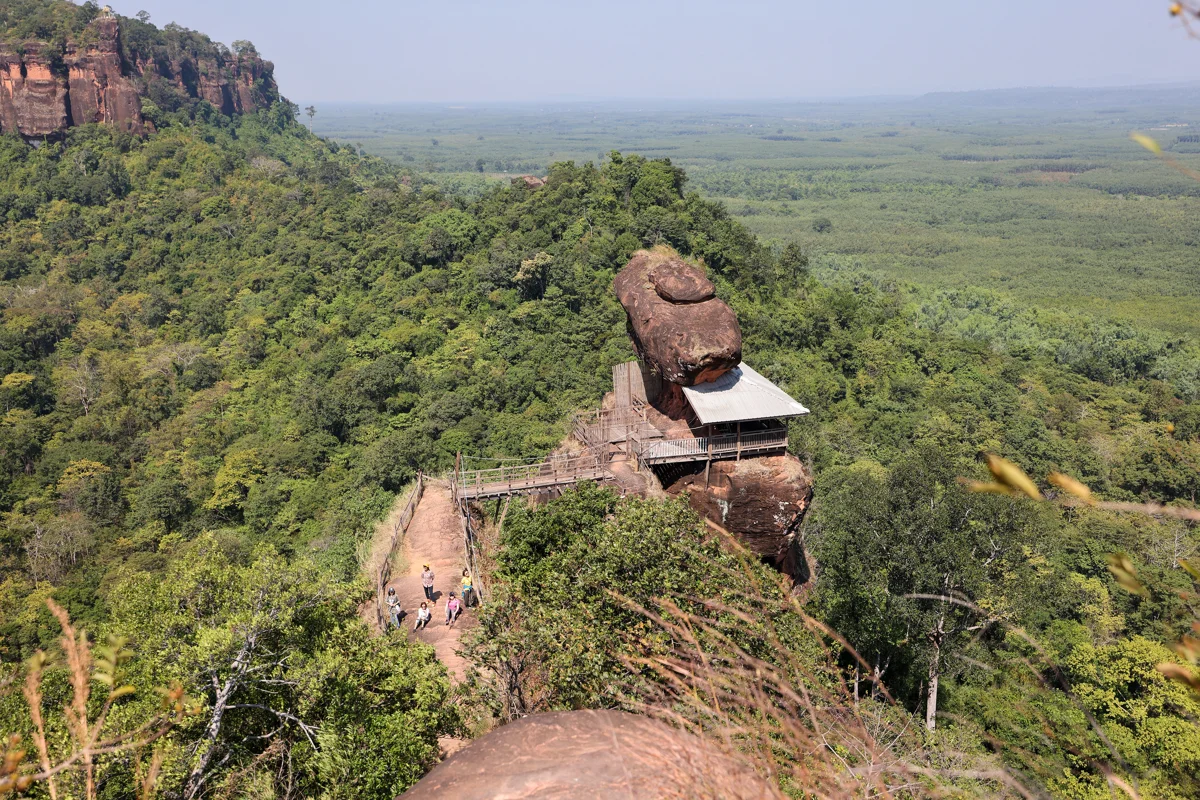
Level seven is the summit. I’d read that it’s known for venomous snakes and locals say you go up at your own risk. I climbed just out of curiosity—there are no walkways or shrines at the top, just open mountain. The views from the very peak are great if you find the right spot, but honestly level six is what you came for.
Practical Tips
- Time needed: Allow about 2 hours at a moderate pace. I stopped constantly for photos and still only took that long.
- Clothing: Even though it’s essentially a hike, this is an active temple. Wear pants, covered shoulders (a sleeved shirt), and proper shoes—sandals won’t cut it on those stairs.
- Parking: Plenty of free space at the base if you drive yourself.
- Safety: There are no guardrails or warning signs along the cliff walkways. Keep your eyes on the path and watch your step, especially on the sixth level.
If you ever find yourself in Bueng Kan—and I know it’s not the first place that comes to mind when planning a Thailand trip—make Wat Phu Tok your reason. It’s one of those places that stays with you long after you’ve left.
Keep exploring: where to eat in Melaka · more travel